










































































Rümeysa Öztürk, a Tufts University graduate student who was detained by ICE last year, returned to her home country, Turkey, after completing her PhD program in February.
Öztürk, who received a doctorate in child studies and human development, said that she did not wish to lose more time to the “state-imposed violence and hostility” she experienced in the United States.
“After 13 years of dedicated study, I am very proud to have completed my Ph.D. and to return home on my own timeline,” Öztürk said in a statement. “The time stolen from me by the U.S. government belongs not just to me, but to the children and youth I have dedicated my life to advocating for.”
Öztürk’s decision to return to Turkey has sparked conversation amongst advocacy groups and legal scholars about the future of international students in the United States, as well as high-skilled positions often filled by immigrants.
Todd Pomerleau, a Boston-based lawyer who has represented several high-profile targets of the Trump administration’s deportation operation, said international students’ fear of speaking up could have “grave consequences” for freedom of expression in the country.
“We’re seeing this trend throughout the country, and it’s deeply disturbing to anyone who cares about civil liberties and anyone who’s studied the history of the Constitution,” Pomerleau said.
“[The United States could] be effectively like a tunnel vision society, where only certain viewpoints are cherished, and others are castigated and even prosecuted.”
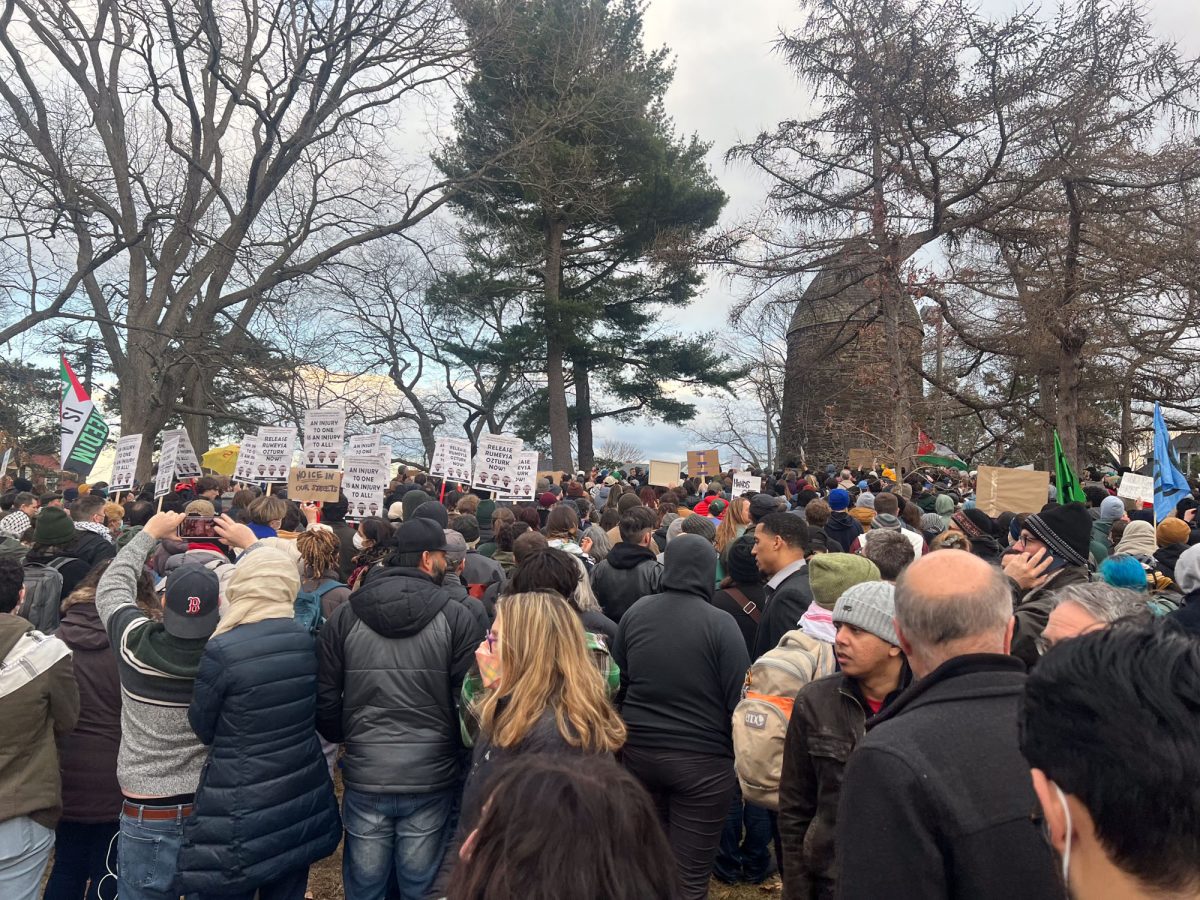
Masked Immigration and Customs Enforcement agents detained Öztürk in March 2025 after she co-authored a pro-Palestinian op-ed in the Tufts student newspaper, an action the Department of Homeland Security said amounted to supporting the terrorist group Hamas. A federal judge ordered her released from custody in May 2025.
Following Öztürk’s decision to leave, federal government parties reached a settlement to resolve outstanding legal issues in federal court and moved jointly to dismiss her immigration proceedings.
Lokesh, the chair of a socialist organization at Northeastern University who requested to only be referred to by their first name for privacy reasons, said Öztürk’s decision to leave the United States was “completely understandable.”
“The conditions in the United States right now are really untenable for anyone that’s on any visa,” Lokesh said. “If I was in her position, I would absolutely leave as well.”
Lokesh said the Trump administration’s deportation policies often target international students, who are “behind a lot of the cutting-edge research that we see in Boston,” she said.
“They work tirelessly,” Lokesh said. “They’re working not just for themselves, but in many cases, for their families as well, and you can see it in their work.”
Hayat Bearat, a clinical professor and the Director of the Domestic Violence Institute at Northeastern University School of Law, said current or prospective international students don’t wish to live under the “magnifying glass of our government” or in fear of potentially losing everything.
“Nobody is safe from our state-imposed violence in the United States right now, and immigrants are all targeted,” Bearat said.
International graduates from U.S master’s and doctoral programs have a 50% and 75% retention rate, respectively, while the overall retention rate for all international degree recipients is 41%, according to a 2024 report from the Economic Innovation Group, a public policy organization.
“The reality is that a school, like any other business, is always seeking to recruit the best talent possible,” Pomerleau said.
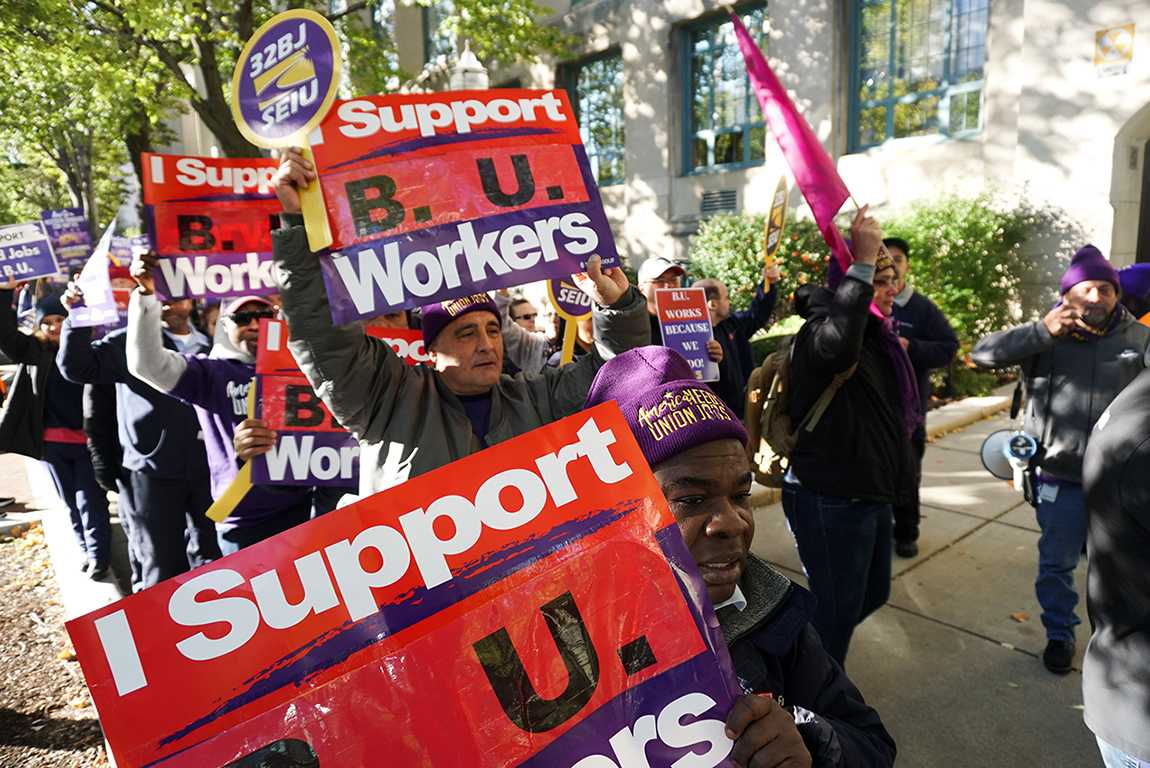
Lokesh said international students don’t want to put their name on anything that could be viewed as “anti-government” over fear of being deported, and are hesitant to participate in political activity, including labor union organizing.
“When I talk to international students that are in the labor union at Northeastern, they say they’re very scared to organize,” Lokesh said. “The TAs, the RAs, are all quite underpaid, and they can’t get better wages, better conditions because of the fear that Trump has instilled.”
An immigration judge ruled in February 2026 that the government had no grounds to deport Öztürk; however, the DHS appealed that decision to the Board of Immigration Appeals soon thereafter.
“DHS is glad to see Ozturk self-deported from the U.S.,” a DHS spokesperson wrote in a statement to The Daily Free Press, “Visas provided to foreign students to live, study, and work, in the United States are a privilege, not a right.”
As part of her settlement, Öztürk was free to return to Turkey without further interference from DHS and the government acknowledged she was in lawful status at all times while studying in the U.S., according to the ACLU.