

























































































Between the harrowing pace of hustle culture, the endless scroll of social media and the rapid development of technology, finding peace and quiet in the digital age has grown difficult.
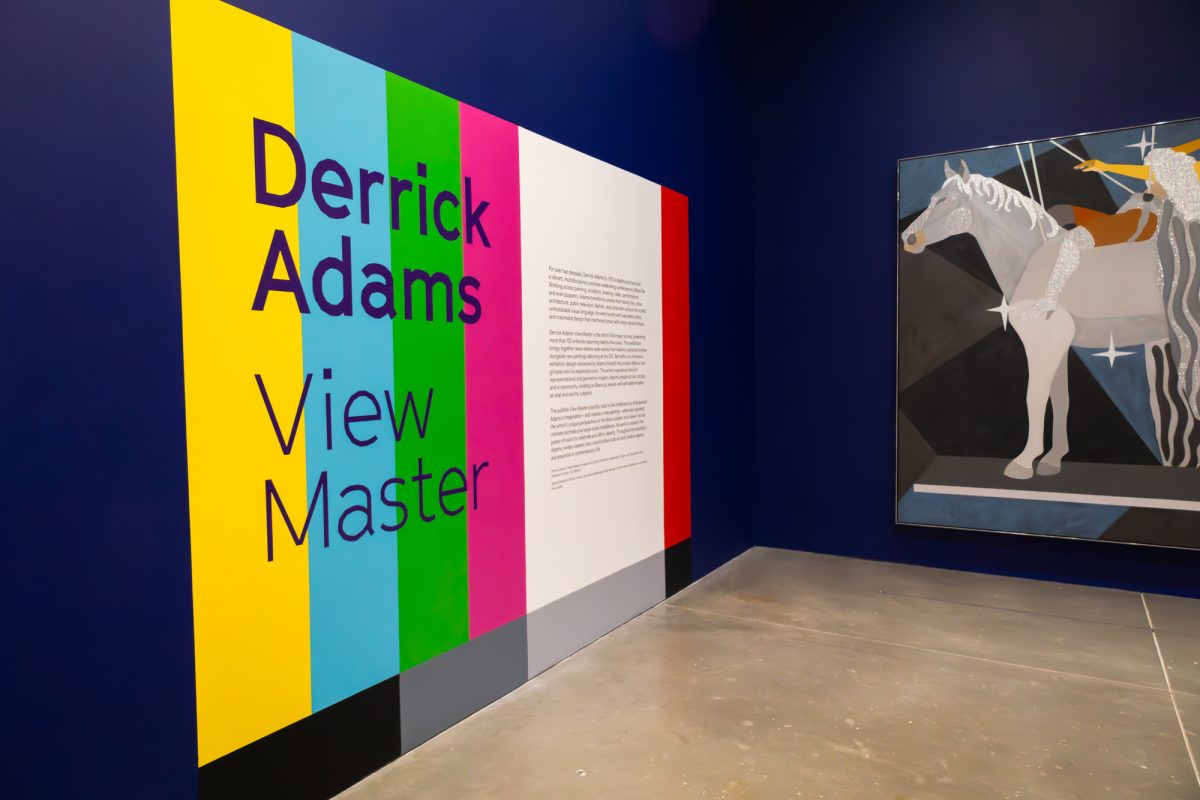
But the experience of calmness and leisure is exactly what artist Derrick Adams strives to reveal in his mid-career survey “Derrick Adams: View Master,” running from April 16 to Sept. 7 at the Institute of Contemporary Art Boston.
“It’s so important that when Black folks enter museums, it’s not just seeing repeated trauma on display,” said Tessa Bachi Haas, co-curator of the exhibition. “For one’s identity to not only be defined by trauma, but by the multiplicity of experiences and ideas that happen.”
Adams’ works connect Black history and culture with broader American history, according to Dexter Wimberly, co-curator of the exhibition.
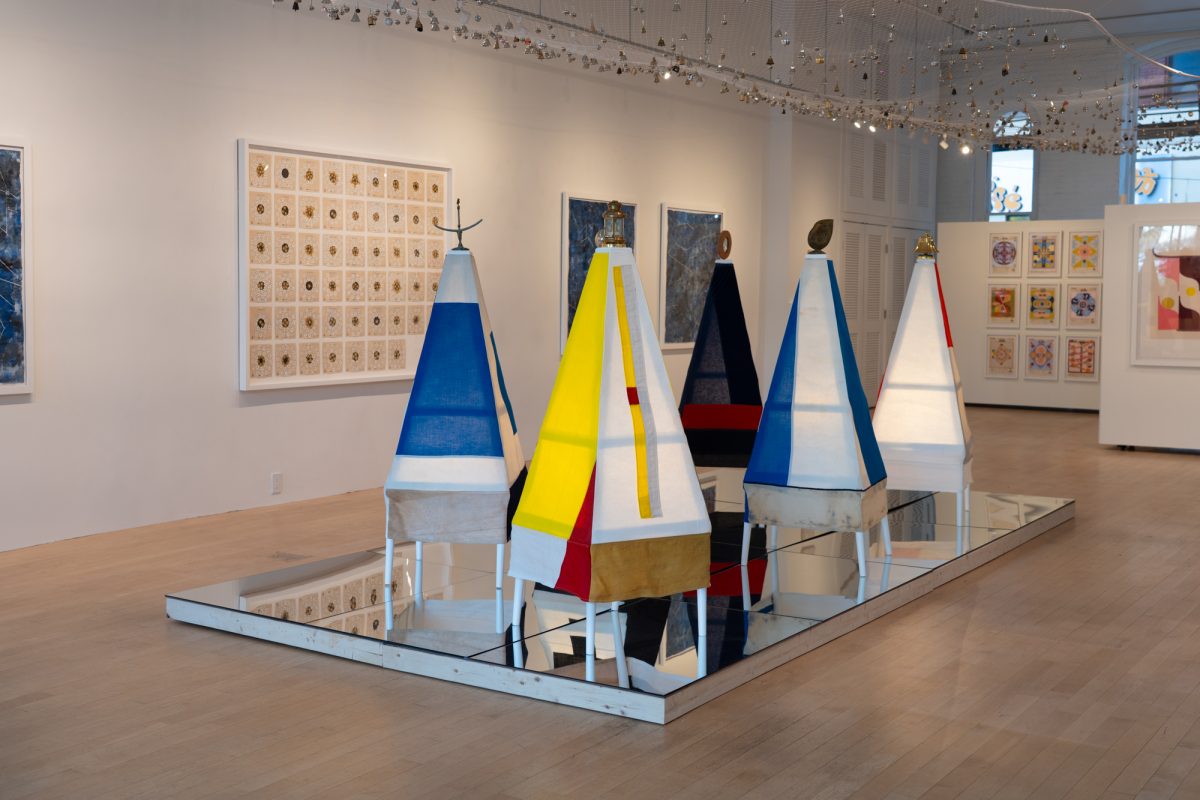
“View Master,” showcasing over 100 artworks spanning 25 years of Adams’ career, explores five themes: urban landscape, domestic life, play, performance, and television and media.

Wimberly said he and Adams have worked together for over a decade, and it was Wimberly who suggested a mid-career survey to Adams a few years ago.
During the multi-year development period, Wimberly said, Adams came up with the exhibition’s title, “View Master.” The title is a tribute to Charles Harrison, a Black designer who redesigned the View-Master into the kid-friendly stereoscope toy version used today.
The pieces span across various mediums, from paintings and sculptures to performances and collages.
“He’s just one branch in the tree of artists who see themselves and their work as a reflection of a particular aspect of Black life,” Wimberly said.
Adams uses Black leisure as a focal point in his art — many of his pieces depict relaxed and playful figures, including “Braving the Path,” a brightly saturated painting of a child playing on a spring unicorn rocker.
“It’s always good to be reminded that there is a different way to live and that there’s a different pace we can move at,” Wimberly said. “There is a part of the human condition … that always feels like things are moving faster than we’d like them to be.”
Although Adams focuses on peace and leisure, Bachi Hass said he doesn’t ignore the challenges and adversity Black people face.
“It’s not just about only centering Black joy, in this very toxic positivity sense,” she said. “But it’s also not about putting trauma on display.”
The exhibition includes pieces from Adams’ “Floater” painting series, which shows Black people relaxing on floaties at the pool.
Bachi Haas said the pool carries history and can be a “loaded political environment” for many Black people in the United States. She said Adams’ work holds space for the beauty and leisure that can also exist in that environment.
Gracie Korstjens, who works as security and an educator in the gallery, said they noticed that attendees find it “refreshing” to experience serious topics without being “bogged down.”
Korstjens also pushed back against putting Adams’ work solely into the “Black joy” category, instead encouraging play and leisure to be represented as normal aspects of the experience of more minority groups.
“This is what normalcy should look like, to engage with play and leisure in a very normal way and not for us to necessarily platform it,” Korstjens said. “Joy should be a normal thing.”
For others, like attendee Justine Francois, the most important part of the exhibition was that it offered a chance for her children to see “representations of themselves.”
“Everything is so relatable,” Francois said, referencing one of Adams’s “Figures in the Urban Landscape. “It’s just so full of culture, and it just feels like home.”
Bachi Haas said it is Adams’ ability to highlight the beauty in history and experience that helps his work resonate with all kinds of audiences.
“What you see in this exhibition is very much [Adams’] view of the world,” she said. “He really is our view master.”