
























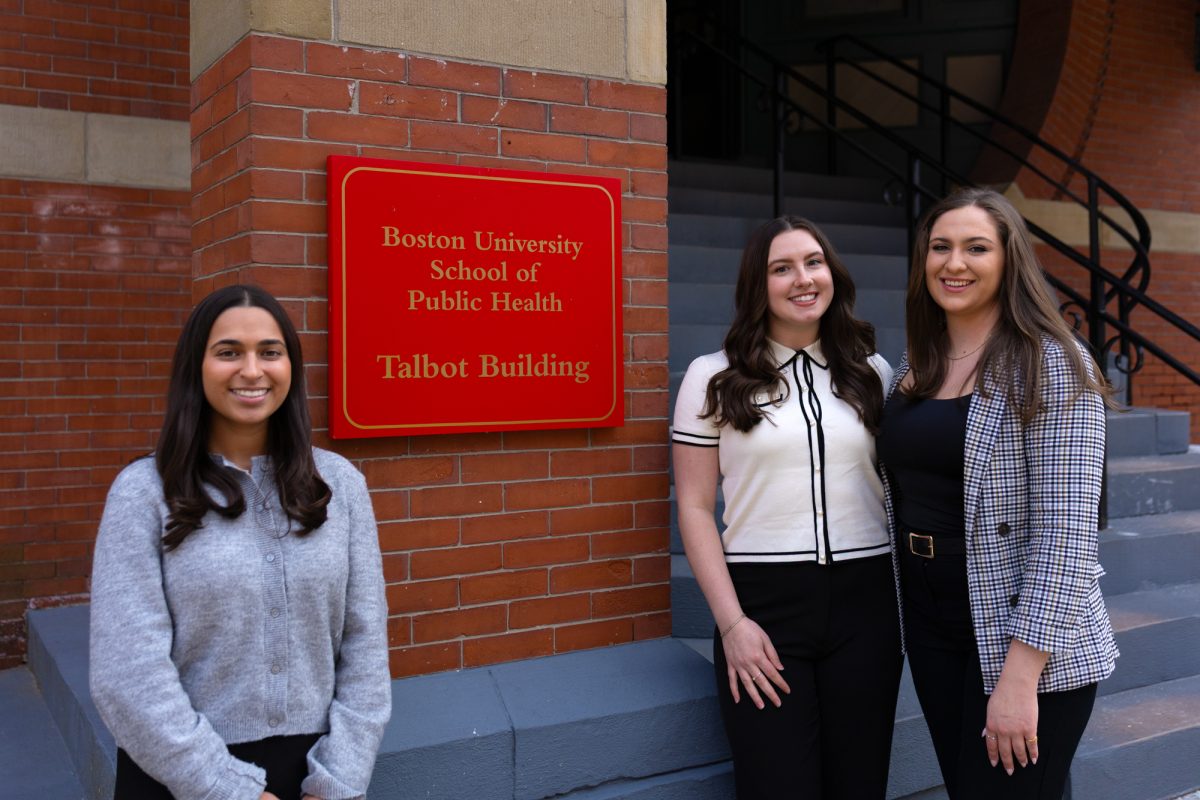














































































A recent study led by researchers at Boston University’s School of Public Health found that people who can’t afford dental care are at a higher risk of developing fatal health outcomes, like cardiovascular disease and dementia.
The study surveyed people from the All of Us Research Program, a National Institutes of Health database that includes hundreds of thousands of people across the United States.
Researchers then tracked the health records of 98,787 participants over the age of 55 who said they delayed getting oral care due to financial barriers, looking to see if they developed conditions such as strokes or dementia.
They found that people who delayed oral care due to cost had a higher chance of getting heart failure, heart attack, stroke and dementia later compared to those who received frequent dental care.
Eliminating financial barriers, the study states, could lower the likelihood of each condition by 2-4% among older adults.
While previous studies linked poor dental care to poor heart and brain conditions, this study is the first to suggest that financial circumstances also play a role.
“It’s not so much that not having insurance is the cause of heart disease. It’s the mechanism behind it,” said lead author Mabeline Velez, an instructor of health policy and health services research at SPH and a fourth year PhD candidate in epidemiology at BU’s Henry M. Goldman School of Dental Medicine.
“People who are not able to afford [dental care], they delay care. And by delaying care, their oral health becomes poor,” Velez said. “It’s linked to developing health outcomes later on, and that is the mechanism.”
Kendra Sims, senior author of the study and assistant professor in the SPH department of epidemiology, said that by following participants throughout their lives, as opposed to after they’ve developed heart disease or dementia, the study better linked those outcomes to dental care cost.
“We instead started with people who were all free of those diseases, and we followed them in time,” Sims said. “That gets us one step closer to cause and effect.”
By linking poor oral health with something tangible, like cost, the study offers a clear roadmap for policymakers to improve health outcomes, Velez said.
“We can try to make sure that [people are] able to go to the dentist in a timely manner,” Velez said. “If we know that cost is a barrier, we can address it.”
Velez said the study shows that integrating dental care with regular healthcare is crucial because of how intertwined the two are.
“We want to bridge that gap between overall health and oral health,” Velez said. “Maybe that could mean that we have joined clinics. Maybe we’ll have more dentists referring people to the doctor, or doctors referring people to the dentist.”
Maria Glymour, a co-author of the study and the chair of epidemiology department at SPH, said health research should be less focused on a specific outcome like heart disease and more focused on what leads to those outcomes.
She highlighted how this study looked at all the different ways one factor could affect a large, heterogenous population. By looking at health outcomes this way, she said, researchers can focus on finding and addressing “exposures,” or social factors that are “powerful determinants of health.”
“Thinking about these things that are on the exposure side, where we know we can intervene to change this exposure … is very important,” Glymour said.
Sims said if dentists can expand their role beyond just oral care, such as screening for factors like high blood sugar or lipids, they can warn patients earlier.
“What if we could, at scale, have two opportunities a year, [when] you’re going to a dentist, [where] we could screen for the leading risk factors for heart death?” Sims said. “Catching [symptoms] early is what we call primary prevention.”
By making dental care high quality, affordable and focused on prevention, Glymour said outcomes like heart disease and dementia could improve as well.
“We take it for granted that people should be able to access medical care for cancer or for other types of physical health,” Glymour said. “Yet somehow we often lose the priority of that with respect to dental care.”
Velez said oral health is often left out from health conversations despite being an integral piece of overall health.
“Having good oral health does not only affect the health of the mouth, but also it affects the overall health of the human being, and also the well being of the people,” Velez said.
Glymour said she hoped the study would convince people to include dental care in mental health conversations.
“It is going to be somewhat expensive, of course, to make sure that everybody has really good oral health care,” Glymour said. “And yet that will pay off, not only for them as individuals, but for us as society.”
The study, Sims said, shows that poor health is not just an individual problem, but a societal one.
“We do not need to blame individuals for being unhealthy,” she said, “We need to give them the tools such as the ability to protect their health, instead of just saying, ‘Oh, looks like the sicker people do not take care of themselves.’”



National Landing Smiles • Apr 16, 2026 at 8:57 pm
This is a strong reminder that preventive dental care isn’t just about your teeth. It’s part of long-term health management.