






















































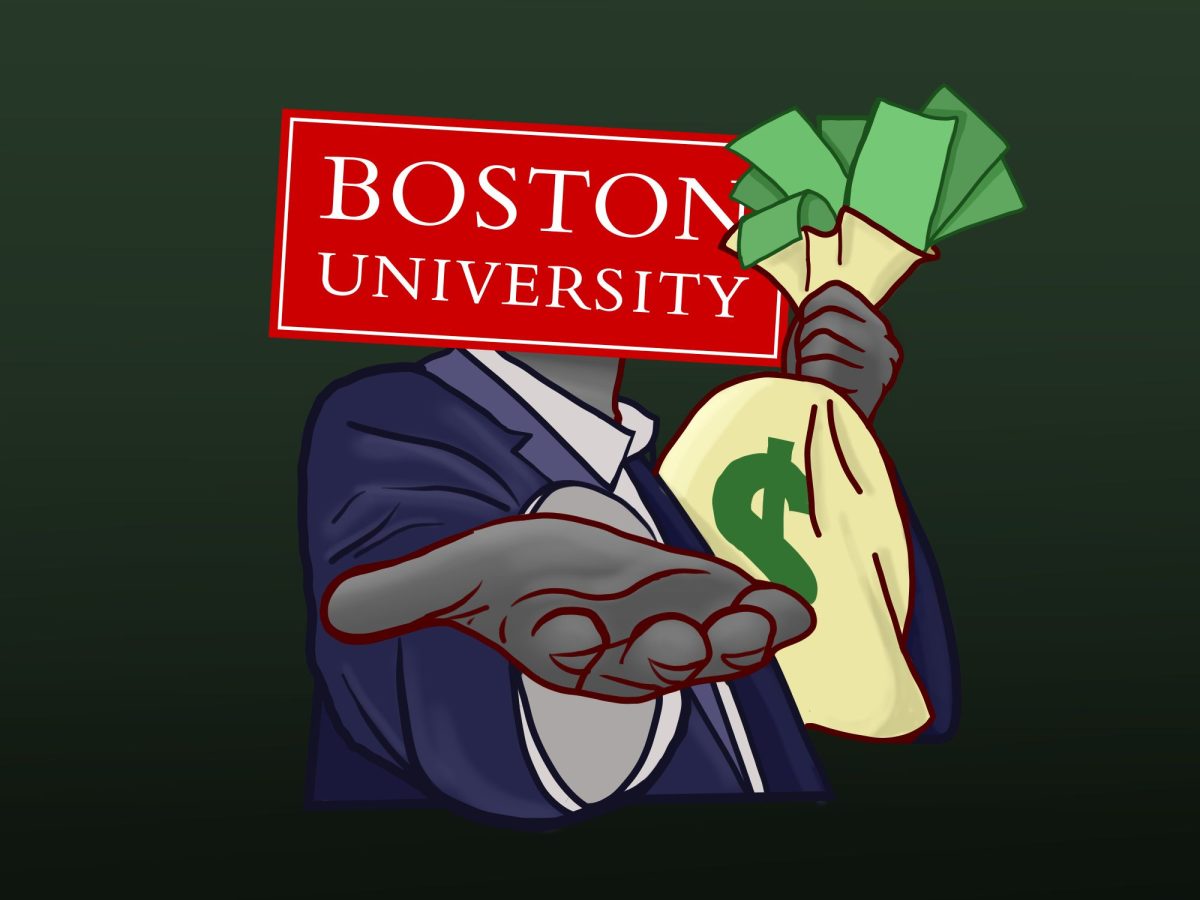


























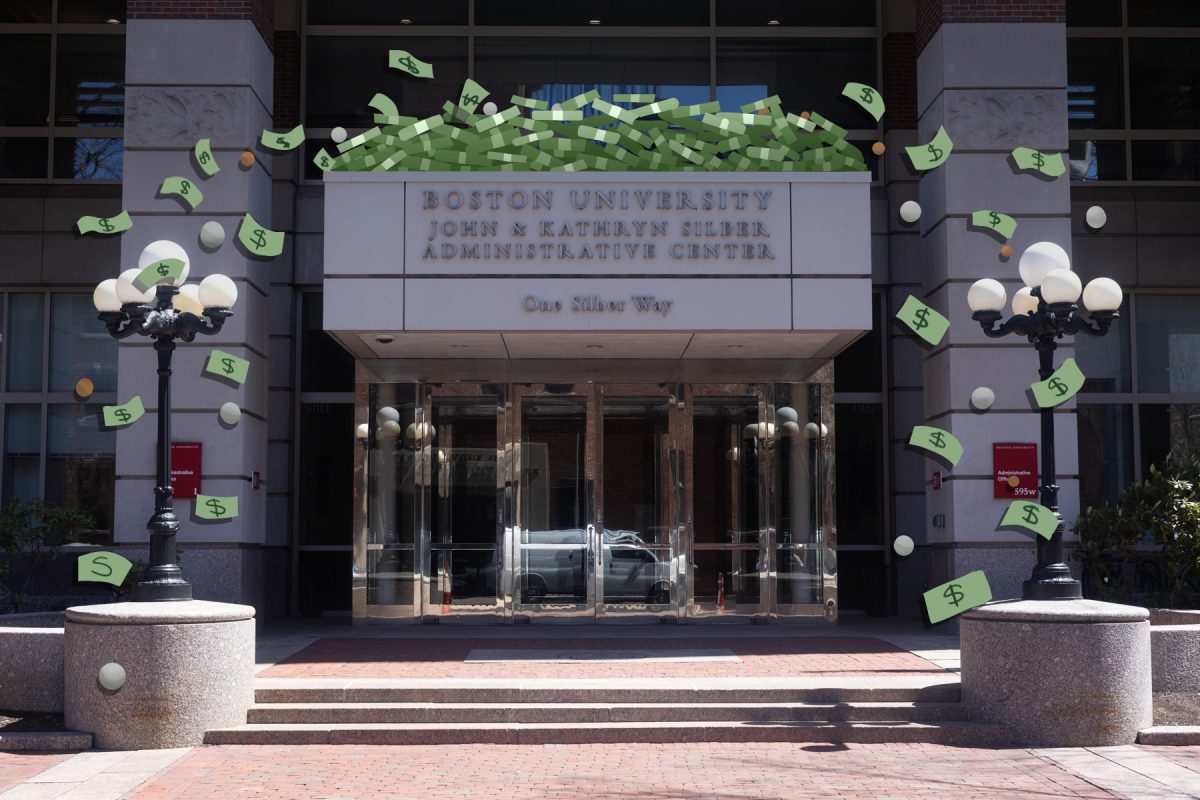


Every spring, Boston University launches its philanthropic “Giving Day” campaign using language evoking community, encouraging students to “give back” and to “Do It for BU.” The messaging is upbeat, even celebratory, complete with hourly challenges and donor competitions designed to boost participation.
But behind the gamified generosity lies a more uncomfortable question: Why are students being asked to give more than they already are?

At a university where the cost of attendance now exceeds $98,000 per year and tuition continues to rise by roughly 4-4.5% annually, the framing of donation as communal goodwill feels disconnected from students’ lived realities. Many undergraduates are far from a position to “give” — they are still in the process of paying, often through loans that will follow them long after they graduate.
Yet we are still inundated with emails asking us to “fuel [BU’s] journey” towards becoming a global destination for human connection and education. But 49% of full-time undergraduates applied for financial aid in 2024, 87% of that group demonstrating financial need.
“Giving back” suggests a completed exchange, something students should do in return after already receiving something of value. But for current students that exchange is ongoing and expensive. Graduating students are contacted to contribute “Class Gifts” as early as the fall semester of their senior year, with emotive emails emphasizing how they can “show off [their] generosity” with donations of just $20.26.
Asking students to donate before they have even graduated, let alone seen a return on their degree, shifts the meaning of giving from generosity to expectation.
Even as university expenses are growing faster than revenue in recent years, BU operates from a position of relative financial stability, with an endowment exceeding $4 billion and net assets exceeding $6 billion. However, endowment payouts cover only a small percentage of the operating budget, contributing 5% of the operating revenue in 2025. And after the Trump administration’s cuts to federal research funding, University officials are concerned with “maintaining the quality” of its academic and research programs.
But the financial struggles of the University do little to distract from the tension students are feeling: Even if costs are rising consistently, why is fundraising directed at those already bearing the burden?
This tension becomes even more pronounced when considering how Giving Day is structured. Giving Day allows donors to direct funds toward specific student organizations, but this option exists within a system where institutional fundraising is far more visible, better resourced and more aggressively promoted, resulting in a dynamic where student initiatives risk being crowded out on the very day that is ostensibly about supporting them.
Even beyond Giving Day, the university’s fundraising apparatus extends year-round. Through programs like BU Telefund, students and families are contacted to contribute further.
At the same time, the University continues to promote initiatives like affordableBU, positioning itself as committed to accessibility. Yet Boston remains one of the most expensive cities in the country for students to live in. The gap between messaging and material reality is difficult to ignore.
There is also a geographic layer to this disconnect. Boston is now one of the most intensely gentrified cities in the United States, and neighborhoods surrounding the university, including Allston and Fenway, have seen rising rents and increasing displacement. As universities expand their footprint and attract student populations with greater purchasing power, long-term residents — disproportionately people of color — are pushed out.
Universities are not just educational institutions, they are powerful economic actors that fundamentally alter the cities they inhabit. When we are asked to contribute more to our schools, we must question how our contributions will fit into a system that is already extracting significantly from both students and surrounding communities.
BU isn’t alone in its heavily promoted appeals for philanthropic contributions — and certainly isn’t the first to face criticism. In 2019, days before Northeastern University’s Giving Day event, satirical posters appeared across campus highlighting the irony of the campaign.
Yet, the broader landscape of higher education is beginning to shift in a different direction. Across Massachusetts, universities are increasingly framing access and affordability as the centerpiece of their student-facing messaging. BU’s approach, in comparison, feels increasingly out of step.
None of this is to say that giving is inherently misguided. When donations are directed toward student organizations, mutual aid efforts or scholarship funds, they can meaningfully support peers and improve campus life. But these forms of giving are arguably most effective when they are clearly separated from institutional fundraising — not folded into campaigns that risk conflating student generosity with university revenue generation.
If BU wants to foster a genuine culture of giving, it should start by addressing the conditions that make giving feel like a burden rather than a choice. That means confronting rising tuition, increasing transparency around financial priorities and reconsidering how and when students are asked to contribute.
Until then, the question remains: Is Giving Day about building community, or about asking those already paying the price to give even more?
This editorial was written by Opinion Co-Editor Sameeha Sood.