
















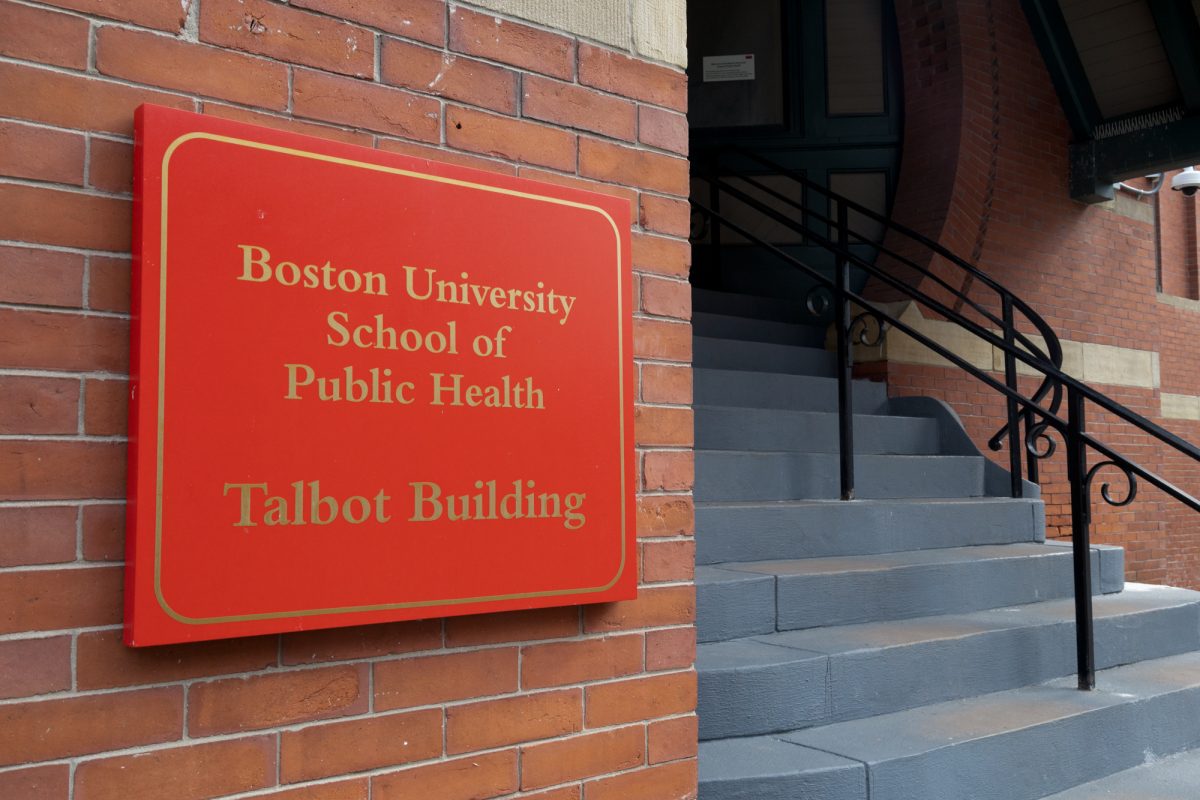







































































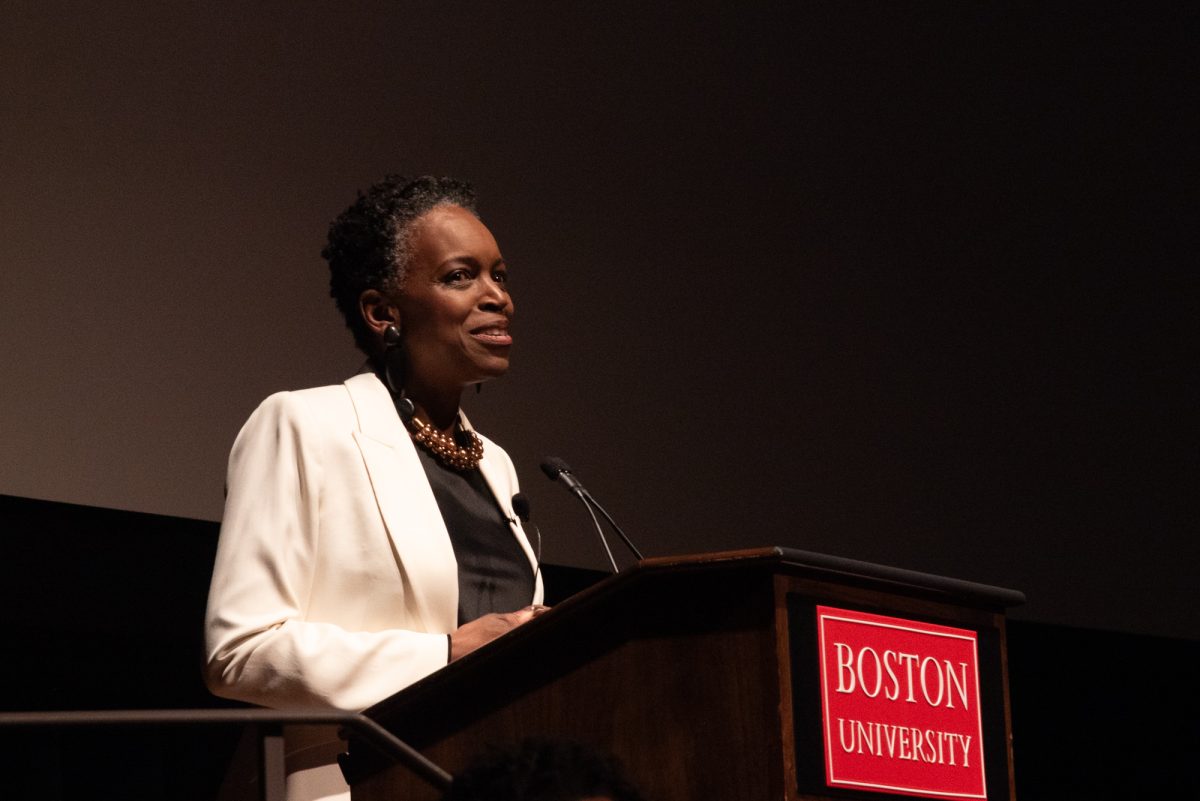
Boston University President Melissa Gilliam issued a press release Wednesday announcing BU’s new strategic framework, which she called “Charting Our Future.”
The framework includes a set of shared goals, guiding principles and initial programs which will align the BU community in a “common purpose to advance” the University.
“Boston University is a remarkable and distinctive place. There are also many challenges facing higher education in general and our institution as well,” President Melissa Gilliam wrote in a statement to The Daily Free Press. “Last month, I announced our North Star vision for the future. This framework describes how we will work together to get there.”
In the press release, Gilliam called upon the community to “lead and build upon the inspiring research, scholarship, teaching, artistic expression, collaboration, innovation, intellectual rigor, and global engagement” that is already happening at BU.
Charting Our Future will replace BU2030 and simultaneously builds upon its successes. BU2030 was approved in 2020 and was founded upon five pillars.
The new framework is built on the same basic ideas, but rephrased into three strategic pillars: intellectual and academic destination, world-class community of talent and being both globally and externally engaged.
The first pillar aims to ensure BU is globally known for its commitment to excellence in research, scholarship, arts and humanities. It also guarantees a singular and transformative education, according to the press release.
The second pillar promises BU will invest in the success and well-being of students, faculty and staff, which will create a community that supports “curiosity, risk-taking, and care,” according to the press release.
The third pillar will expand the university’s impact by strengthening collaboration with organizations, nonprofits, elected officials and federal and state agencies. BU will embark on projects with new partners, donors, alumni and industry leaders, according to the press release.
The goal of Charting Our Course is to solidify that “Boston University remains a beacon of scholarship, partnership, global engagement, and inclusion for all who come after us.”
The vision for this framework being integrated into BU is to make the University a “global destination of discovery, education, and human connection—an epicenter where disciplines, communities, and realities merge and visionary thinkers unite to create transformative experiences and solutions for the world’s greatest challenges.”
“We have ambitious goals for Boston University,” Gilliam wrote. Charting Our Future has a commitment to “operational excellence,” according to the press release.
Chris Sedore, vice president for Information Services and Technology and interim vice president and associate provost for Enrollment and Student Administration, was appointed as the University’s first chief transformation officer to help move collaborative projects forward.
President Gilliam wrote that, in her more than 18 months as president, she has gotten to know many alumni and families and has seen how “remarkable” BU is. She heard the community voice its concerns, which are rolled into the framework, she wrote.
In the announcement, Gilliam made a nod to outdated structures on campus, a lack of communication and collaboration, budget issues and a need for engagement with the robust network of alumni, parents and community partners, so they can ensure all members of the community feel seen and valued.
“The decisions we make today will affect the next generation of Terriers—and the generations after that,” she wrote.
This framework and the North Star vision, which Gilliam shared at her presidential address last month, must be powered by the BU community’s ideas and leadership, she wrote.
“This moment calls upon all of us to roll up our sleeves and dig in,” Gilliam wrote. “How do we build upon our excellence? Where can we improve?”
Sophomore Ali Montez said she believes the pillars are beneficial, particularly the one focused on student, faculty and staff wellbeing, but said the University needs to expand its mental health initiatives for students.
“Sometimes they have little pop-ups like, ‘Oh, here’s your mental health kit’ and all that,” she said. “But I feel like they could push more on that just because BU is a very hard academic school, and it does take a lot of mental toll on you.”
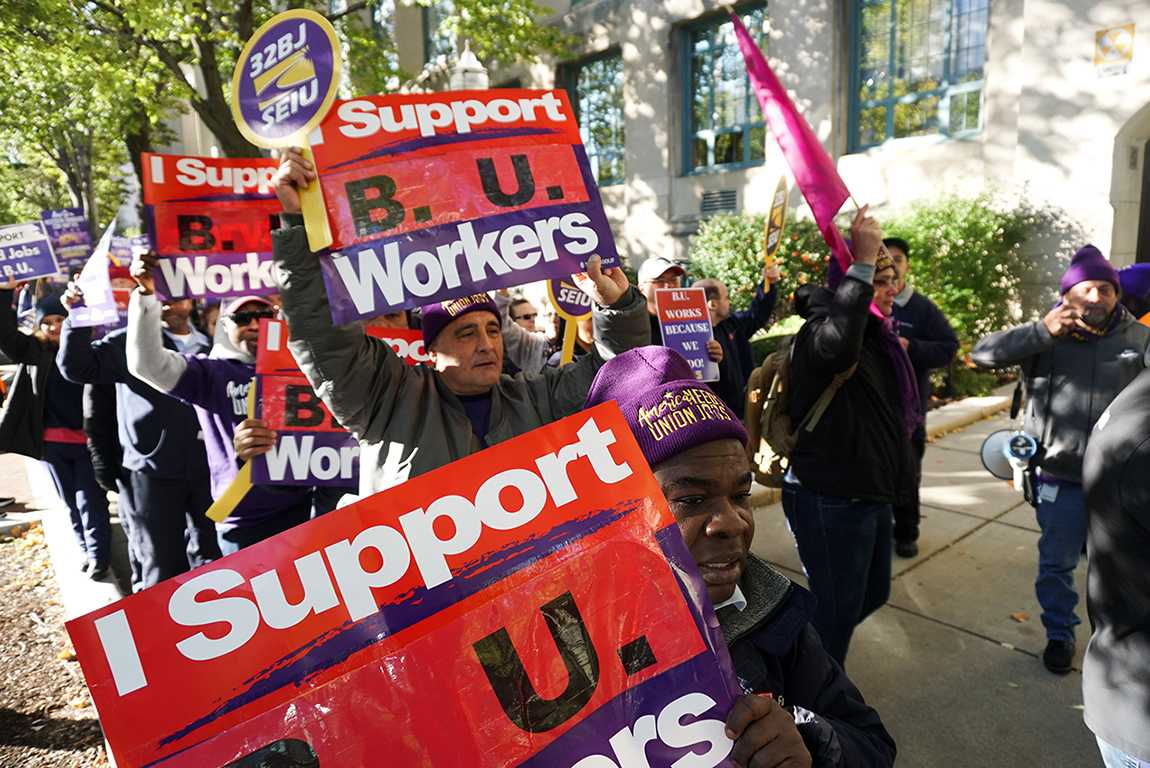
As a member of Omega Phi Alpha, a national service sorority with hundreds of collegiate members, Montez said she has served the community both at BU and around Boston, and believes BU should advocate more for its service workers.
She suggested the school create a post or send an email of appreciation.
“That way the whole community knows, oh yes, ‘Let’s appreciate our workers,’” Montez said.
BU sophomore Danelly Simon said she hasn’t seen significant change from the last initiative and believes BU should increase support for its student body and be more transparent about community partnerships.
Simon said she believes the University fulfills the second pillar through its Career Center, but could be more supportive of its clubs and organizations that lack sufficient funding.
She shared that friends at other universities often receive necessary software, such as Canva, for free, whereas BU does not provide many of these required academic programs.
Simon said if BU was more open about its partnerships, students would see how the University is helping the community, and want to get involved.
“I would like to know how our school is … benefiting our community, and I think just being more vocal on that would be reassuring for the students specifically, because we want to know we made the right choice coming to the school.” Simon said.


