











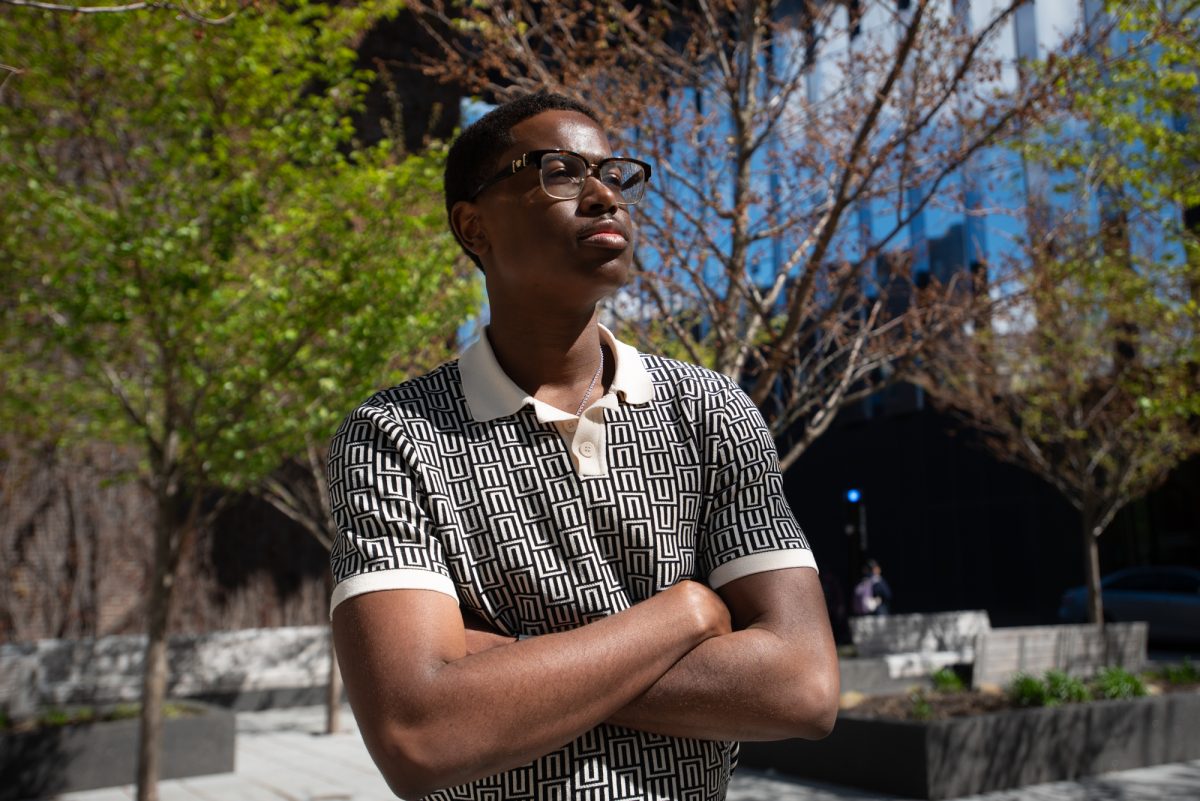






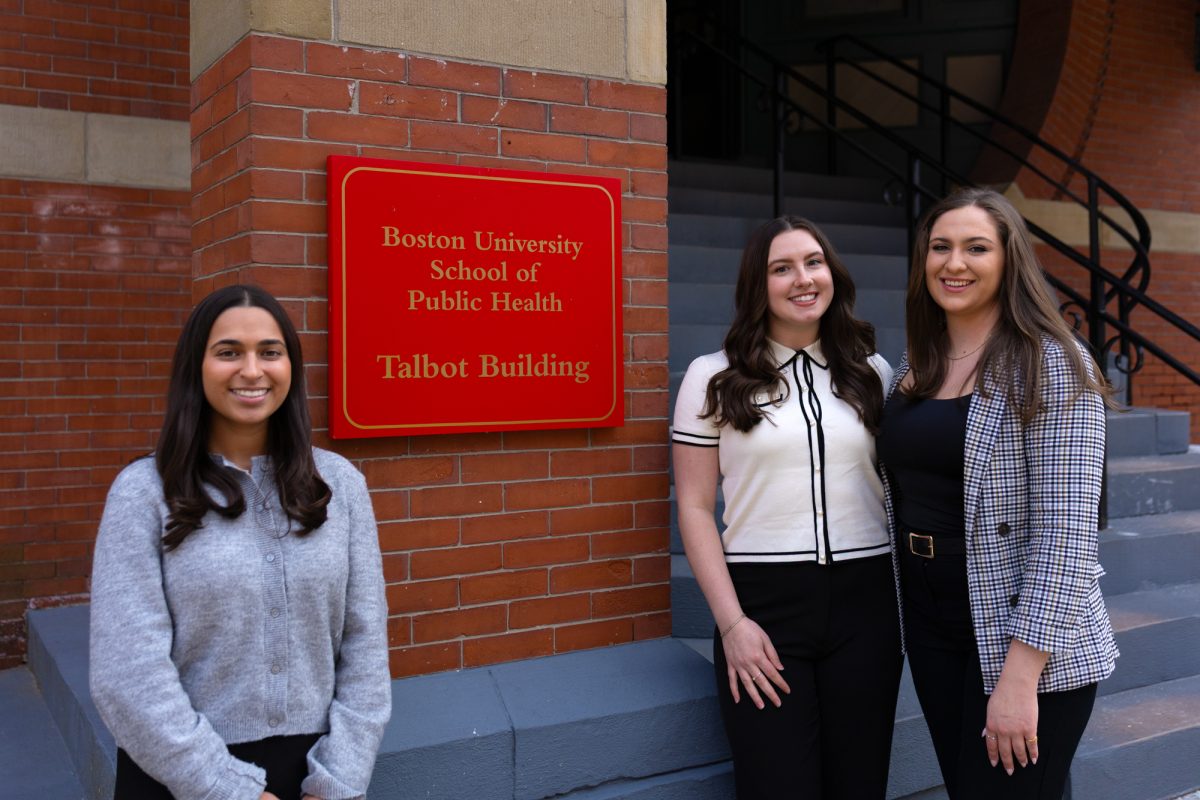







































































BU sophomore Michael Tsegaye and juniors Cian Moss, Esther Kim and Mya Kelly joined together because of their background in Student Government and other club leadership, but what ultimately ties them together is their passion for student representation.
“Because we all have a similar passion of serving students, first and foremost … it makes the work easy,” Kelly said. “Working together has just been so much fun. We get to giggle, and then we also get to work really close together and focus on the serious things.”

The four members of AspireToBU, one of three slates running for 2026-27 Student Government executive board, hope to initiate a slew of policies to uplift and connect BU’s student population, according to their campaign platform.
“There is so much fun and joy to [StuGov] and there’s so much work that can be done, but it is also very logistical,” said Moss, the slate’s vice president of finance. “To push all these initiatives, you have to know exactly what to do … We are already equipped with the experiences and knowledge to get our policies done right away.”
Moss and Kim, the slate’s vice president of internal affairs, have both been co-directors of engagement in StuGov, Moss said. Kelly, the slate’s vice president, has been the current StuGov vice president’s chief of staff.
“We brought a lot of different experience and perspectives that I think is beneficial and needed with Student Government,” Moss said.
Tsegaye, Aspire’s president, credits much of his experience and approaches to policy to his participation in BU’s International Affairs Association.
“I’ve gotten a lot of time acquainted with how clubs operate and how they interact with the Student Leadership and Impact Center,” he said.
With several dozen staff members on the campaign and flashy graphics on their social media, the slate members said they want to build a strong sense of community across BU. They plan to introduce not only policies to get people connected, but also places.
The Dog Pound, a proposal of Aspire’s, would be a place where students can come together and hang out. It would operate as a late-night, StuGov-run “third space” with events hosted by student organizations, according to the slate’s campaign platform.
The initiative follows the closures last semester of many late night dining options on campus.
“We hope that by having that central location, students would be able to meet other students on campus and form natural relationships that way,” Kim said.
Another initiative Aspire hopes to provide for students is a transportation pass, which would give students access to the MBTA and Blue Bikes at lowered costs.
To Aspire, building a sense of community on campus also involves highlighting BU’s clubs.
“A large strength of BU’s student population is its cultural diversity,” Tsegaye said. “One way in which we, Student Government, can be of help is by partnering with cultural and affinity groups on campus in order to host events, especially towards the beginning of the year for new students.”
This includes giving these groups space to speak out, without fear of serious repercussions, Moss said. Many of Aspire’s initiatives are in response to recent events in which groups have been silenced, including the removal of LGBTQ+ pride flags at multiple campus locations over spring break.
“Our LGBTQIA listening circles, I thought that’s a very timely initiative at this point in our school’s history,” Moss said. “Creating spaces for queer, trans, however you may identify, people to have that safe space after having that space taken away from them with the removal of all these pride flags is something that I think is important.”
Tsegaye said a “proper place on campus” for “activist groups” to collectively organize is important, referencing how BU’s Young Democratic Socialists of America group and Students for Justice in Palestine — two student groups which have been suspended and have since disaffiliated with BU — continue to meet off-campus.
The Aspire campaign also emphasizes transparency in their initiatives, using it as a tool to better inform students about a range of issues, including housing costs and on-campus resources.
“There’s so many resources that this school has,” Kelly said. “Everything exists, I’m sure of it, but it’s in so many different places and they’re kind of hidden … Putting it onto a universalized class platform would help overall transparency.”
The slate members said they are passionate about speaking with students to understand key problems on campus.
“We have teams across campus … that are every day actively going and talking with students,” Kim said. “It’s not starting when we get elected, but for us it’s starting now … We want to begin these partnerships and relationships now.”
Kelly said Aspire has had and will continue to have conversations about these issues with leadership at BU.
“Students want to have their voice heard on campus and they want to be able to do it in a safe manner without fear of retaliation,” she said. “That is something that the Dean of Students also wants for students. We want to continue to partner with them, making sure students … are being able to showcase their passions in a proper way that doesn’t harm any student on campus.”


