





































































































Boston University sophomores José Quintero and Autumn Blough talked over coffee in November about how they felt BU’s resources were not being used to fully support students. In that moment, the two realized they could be the change they wanted to see, and REPBU was born.
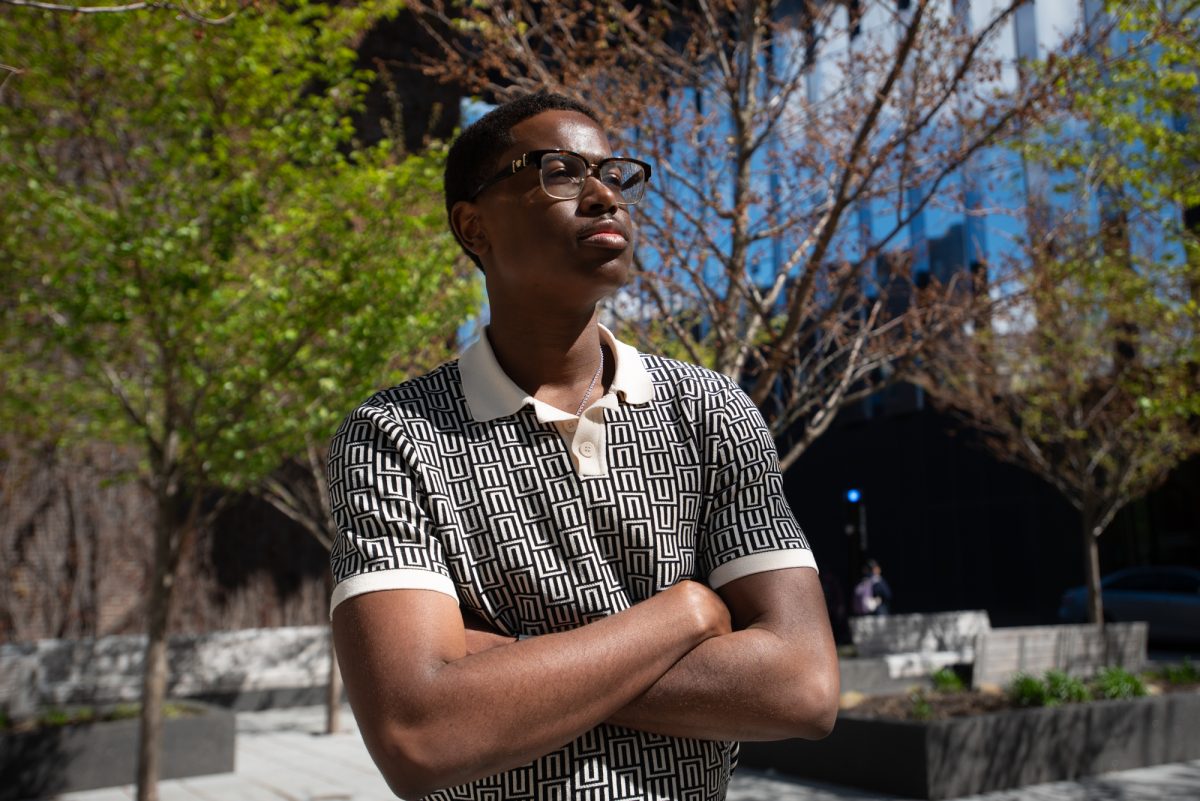
Representation, equity and preparation form the three pillars of REPBU, one of three slates running in the 2026-27 Student Government Executive Board election. Quintero and Blough, along with sophomores Jaise King and Kainat Deo, comprise the slate’s four members.

King, the slate’s presidential candidate, was drawn to REPBU by his fellow candidates’ “genuine will to serve people.”
“REPBU is a renaissance for the voice of students,” King said. “Far too long, Student Government has been a force for trying to appease administration, rather than actually being an advocate for student voices.”
King said he became interested in running for BU StuGov after serving as a DEI delegate for the College of Communication StuGov during his freshman year. He said connecting with a wide variety of students made him “interested in being that voice, being more present on campus.”
The idea of putting students at the center of StuGov also appealed to Deo, the slate’s vice president of internal affairs. Deo said her personal experiences, conversations with friends and student organization involvement revealed a recurring sense of a disconnect across campus.
“The biggest thing that’s helped me truly fall in love with this community has been getting involved with student organizations,” Deo said. “Having friends that are feeling unsupported at BU gives me a personal conviction to want to create an environment that can support everyone.”
Blough, executive vice president for REPBU, said her frustrations began after she, a cellular and molecular biology major, declared a pre-law track. She pointed to feelings of isolation within her major and difficulties in finding opportunities and resources.
These frustrations, and a desire to create academic pathways for students like herself, led Blough to join StuGov’s city affairs department. She said their accomplishments had “really been inspirational,” showing her that she can solve any problem with the right team.
Quintero’s interest in student government began last March, when he wrote an article covering one of StuGov’s weekly meetings. Reporting on the meeting “broadened [his] horizons” to the diversity of student talents at BU, he said.
The experience prompted his run for the College of Arts and Sciences Senate, which he won. Quintero has served on the CAS Senate for nearly a year.
After their initial conversation, Blough and Quintero scouted and expanded the slate to include King and Deo.
“We wanted to build a diverse team of people from all over the University,” Quintero said.
Under the representation pillar, REPBU’s goal is to place student voices at the center and “ensure that students across BU … [and] everything they represent is well supported,” Deo said. To achieve this, members emphasized accessibility and approachability as key priorities.
“We want to be clear and present in a way that accessibility just becomes the norm, rather than a component of a campaign,” King said. “If you don’t feel like you can approach us, how are you going to feel like your voice truly matters on campus?”
To spread their message, the slate has been tabling at the George Sherman Union, posting on social media and attending club meetings. The slate also provides students the opportunity to book meetings with them.
“When we said approachability, we didn’t mean just, you send us your issues on a Google Form that we never check,” Blough said. “We wanted to have deep conversations where it was a two-way thing.”
Through REPBU’s equity pillar, Quintero said the slate will ensure resources, such as pre-professional opportunities, are allocated in an equal manner.
Transparency is also important to preparation, Blough said, especially when responding to potential emergency situations on campus.
“Rather than upholding a facade that everything’s okay, I think there’s a real need to tackle issues headfirst,” Deo said.
Although REPBU’s policy agenda is broad, Quintero said it was intentionally created to allow the slate the flexibility to implement any student feedback it receives.
“We want to tailor these initiatives to those communities and these students,” Quintero said. “We want to speak with you, the community, and really say, ‘OK, Maybe this community feels underrepresented. How can we put them more at the center?’”
As the election approaches, REPBU is positioning itself as a shift in how BU StuGov interacts with the campus community, with student voices at the forefront.
“You should vote for REPBU if you are seeking a platform to uplift your own voice and … if you want to be part of something that advocates change from the roots up,” Deo said.
José Quintero is a former Daily Free Press writer. He was not involved in the reporting, writing or editing of this article.


