

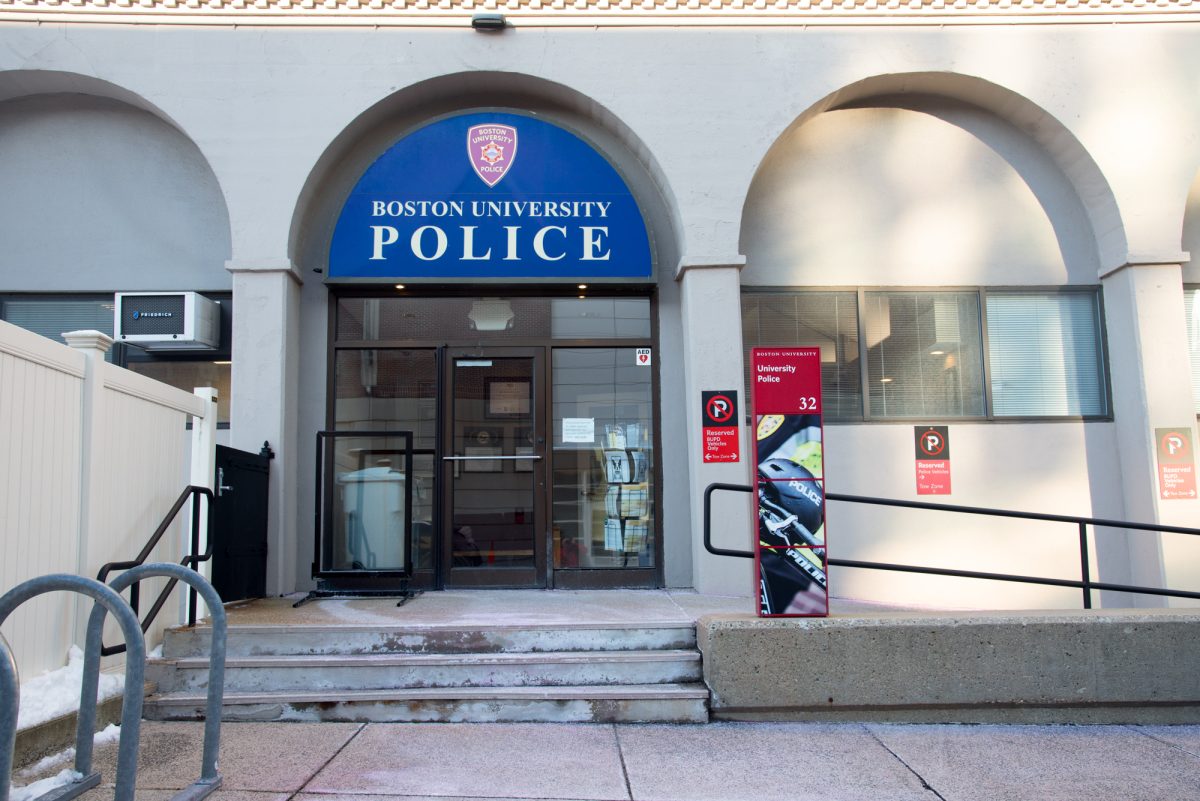













































































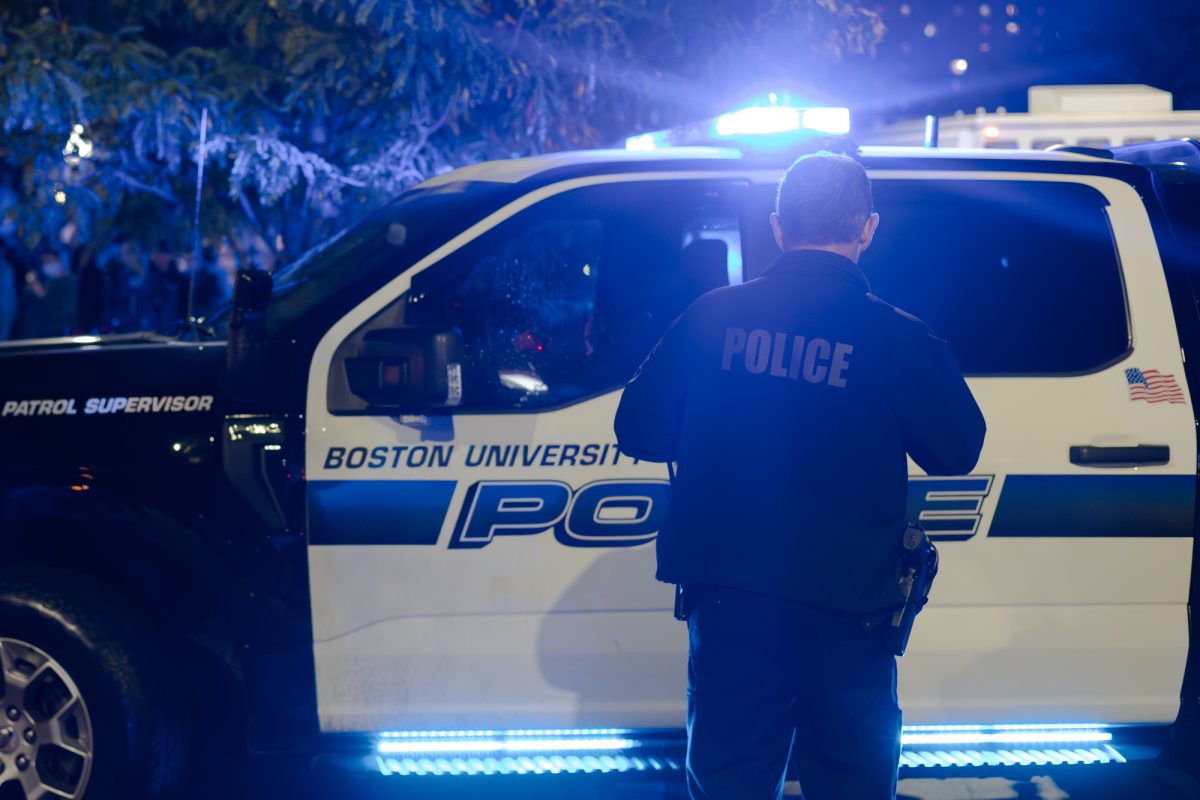


The Boston University Police Department will undergo reassessment for its sixth accreditation April 27, hoping to meet a statewide benchmark that ensures police agencies abide by over 300 standards representing satisfactory police conduct.
“We want to keep up with the best practices,” BUPD Lieutenant Mike Vanaria said. “That would make us more professional and would get our community to trust us more.”
Accreditation is a voluntary process administered by the Massachusetts Police Accreditation Commission to assess a police agency, said Joe Comperchio, the executive director of MPAC.
Vanaria said gaining accreditation ensures police departments in Massachusetts all operate similarly.
“Our police department is no different than the Boston Police Department, than the Brookline Police Department, only smaller,” Vanaria said.
BUPD must meet 274 mandatory standards and 66 of 120 optional standards to receive reaccreditation. The standards are categorized into over 35 chapters, ranging from use of force to conduct and discipline Comperchio said.
Across the state, MPAC oversees 258 police agencies, 120 of which have accreditation. Only 13 college police departments are currently accredited, including the BUPD, according to an MPAC list.
Accreditation expires every three years, Comperchio said. Since 2011, BUPD has been awarded accreditation five times, most recently in 2023. This will be their sixth if they pass.
Comperchio said not every agency gets accreditation, even if they have been accredited in the past.
“We have some agencies that will be accredited one year or be reaccredited one year, and when they’re up for an assessment again, there’s no guarantee,” he said.
BU Spokesperson Colin Riley commended BUPD for their serious approach to campus safety and handling the juxtaposition of trauma cases and young adults’ questionable decision-making.
“There are things that need special professional attention and training for campus law enforcement,” said Riley. “How to handle essentially 18 to 23 year olds … who are becoming independent adults and not always making the best decisions.”
The process for accreditation, from application to award, takes approximately 12 months, Comperchio said.
MPAC will send three officers from other active police departments and a facilitator from the commission to evaluate the BUPD’s facilities for one to three days.
The commission will announce the results of its evaluation in October.
Comperchio said the accreditation at a police department proves a level of accountability for the agency.
“If you’re shown to be accountable for your actions and you’re transparent about what you’re doing, that equals trust with the community,” Comperchio said.
BU sophomore Samantha Longobardi said she doesn’t have a strong opinion about BUPD, but believes its transparency could improve.
“They send out so many of those stupid text alerts but don’t say what they’re for and then the call drops,” Longobardi said. “I think they can maybe clean up that system a little bit.”
BU sophomore Maclain Rockett has had no personal experience with BUPD, but said he has a “general distaste” for policing.
“Police tend to view people as problems more than members of the community that they are meant to … protect and serve,” Rockett said.
The accreditation does not change his perspective on the BUPD.
“Obviously, it means something, seeing as how it’s not like a rubber stamp by any means,” said Rockett. “I don’t know, at the end of the day, a cop is a cop.”
Vanaria said BUPD aims to continue achieving accreditation every three years to help restore trust in the community.
“We are members of the community, as well, and we want the community to realize that,” Vanaria said. “So our goal is for smarter, better trained, empathetic police officers that can go do their job professionally.”


