





























































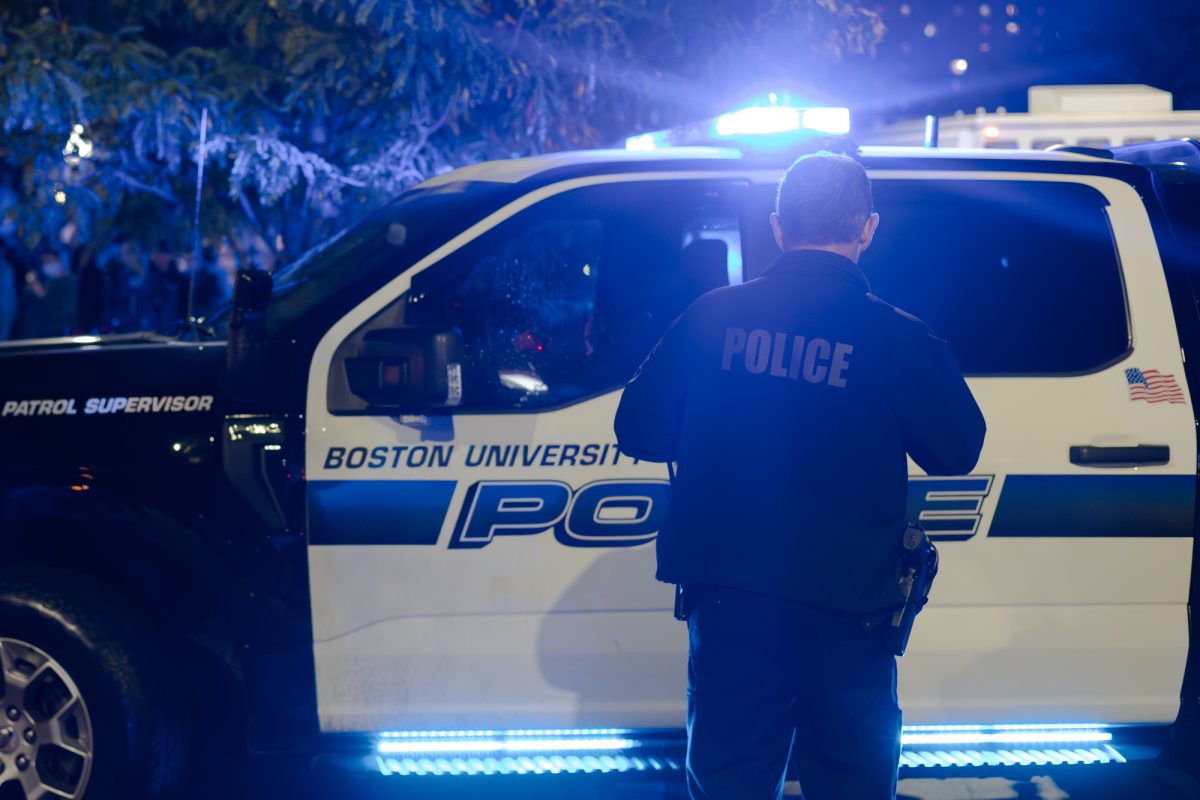


Rampant overtime spending, chronic understaffing, a failing crime lab and continuing racial discrimination are crippling the Boston Police Department.
The Daily Free Press investigative team analyzed nearly 1,000 hours of Boston City Council meetings with AI-assisted tools and manually verified each instance of BPD-related concerns brought up in the city council. The scope of the findings went beyond any single hearing or single incident.
Across more than 200 confirmed instances from Jan. 1, 2024 to Oct. 1, 2025, a consistent pattern emerged: Core police functions were breaking down simultaneously. Councilors repeatedly raised concerns about runaway overtime costs as a result of severe staffing shortages, the lack of a functional crime lab and the department’s promotional system that a federal judge ruled had discriminated against officers of color for more than 50 years.
BPD did not respond to multiple requests for comment.
Overtime costs far exceed budget limits
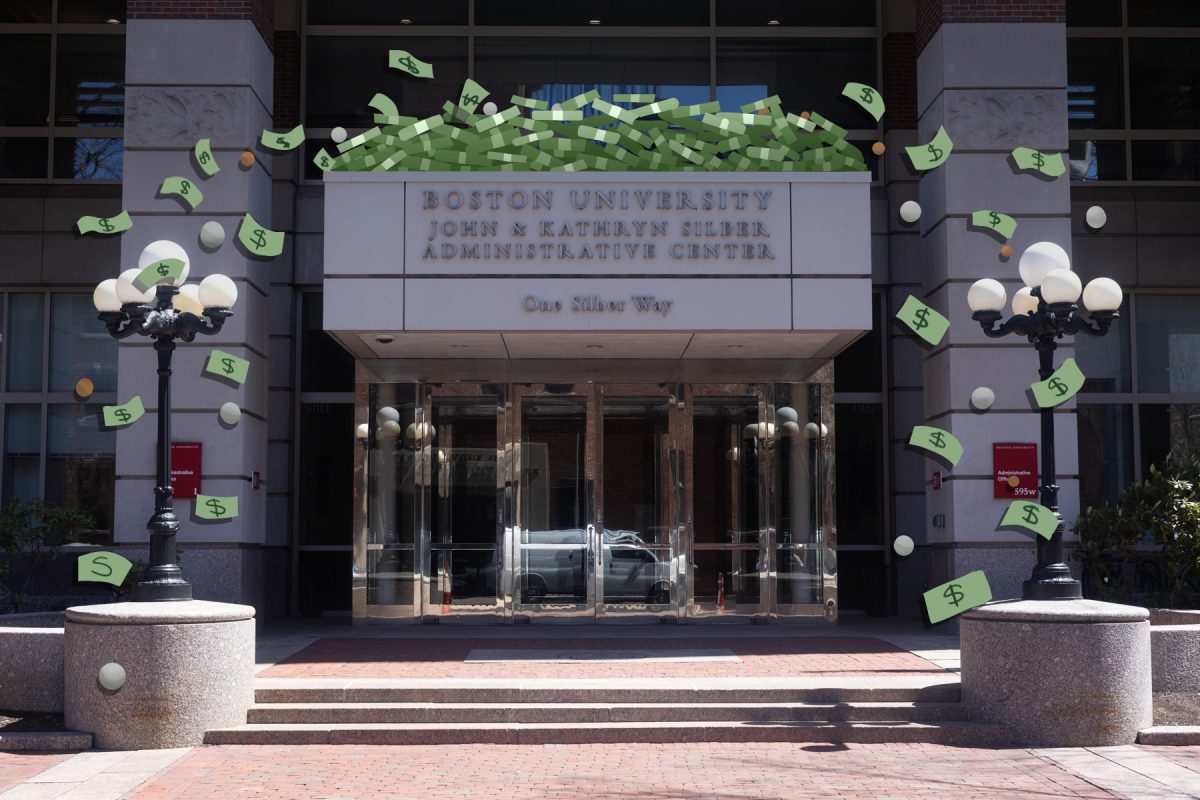
City Councilor Benjamin Weber told The Daily Free Press the department’s overtime system has exceeded its budget “as long as [they’ve] had budgets,” pointing to years where BPD overspent the allocated overtime budget by tens of millions of dollars. The department surpassed the overtime budget of roughly $40 million by around $50 million in 2024.
Weber said while the city council has oversight on budget proceedings, there is no specific cap on how much overtime police can work because of potential public safety concerns or events where police presence is needed.
Weber also noted that some opportunities police have to earn overtime pay are exorbitant. He described a policy in which officers receive a minimum four hours of overtime pay for court appearances after spending a few minutes in front of a judge.
“[Some officers] make [$300,000 to] $400,000 a year primarily from overtime,” Weber said.
The council cannot impose hard limits on overtime for Boston police, Weber said, because rules governing pay, court minimums and special-event assignments are dictated by a collective bargaining agreement between police unions and the mayor’s office.
These constraints mean that year after year, the City sets an overtime budget knowing it will be exceeded, Weber said.
Staffing collapse forces mandatory 16-hour days
City Councilor Ed Flynn said the root of Boston’s overtime crisis is straightforward: The city doesn’t have enough police officers.
At a May 2024 City Council meeting, police officials said the department loses an average of 131 officers each year but hires only about 108, continuing a staffing deficit that reflects a national trend.
“Because of the significant staff shortages, we are forcing police officers to work mandatory overtime, consistently 16-hour days,” Flynn told The Daily Free Press.
Flynn said he has raised the issue repeatedly in his seven years as a city councilor, warning about the physical and mental toll on officers.
Officers working up to 16 hours, Flynn added, cannot be expected to operate at “100%,” which creates safety risks for both the public and officers.
“That’s hurting our department. It’s hurting the city. It’s especially hurting our police officers and their families,” he said.
Flynn said he has worked to prioritize new police hires and more funding, but he noted that many councilors “did not feel it was appropriate to highlight challenges” that BPD is facing, resulting in limited action on staffing shortages.
The shortfall is a primary driver of overtime overspending: Fewer officers mean more mandatory overtime shifts to keep patrols staffed.
Crime Lab leadership left vacant for two years
While staffing shortages strain patrol operations, the City’s forensic capacity has faced its own crisis. At a September 2025 Public Safety and Criminal Justice Committee hearing, councilors described a two-year period during which the Boston Police Crime Laboratory had no permanent director, leaving critical positions unfilled and stalling upgrades to DNA testing.
The Boston Police Crime Lab is the department’s forensic hub, handling DNA testing, rape kit analysis, firearms examinations, fingerprints and other evidence that underpin criminal investigations and prosecutions.
During the meeting, Flynn said the “crime lab has had challenging times” without a director.
Councilors said in meetings across 2024 and 2025 that the lab lagged behind other major police operations because it had not adopted newer DNA testing methods used by Massachusetts and New York City police.
Councilors also noted that Boston continued to miss the state requirement to process rape kits within 30 days. In an April 2024 Public Safety and Criminal Justice meeting, Flynn testified that the crime lab failed to test roughly half of all rape kits within the 30-day deadline in fiscal year 2023.
Those delays pushed Flynn to propose a $1 million budget boost for fiscal year 2025 to hire staff, fill the director position that had been vacant for nearly two years and purchase new equipment.
Although the city council approved the budget boost, Flynn said he hasn’t seen any real progress in the September 2025 hearing.
Flynn told The Daily Free Press he remains “not confident in the Boston Police Crime Lab and their leadership,” citing the extended vacancy and ongoing technological shortcomings. He said the City must ensure the lab has “the most advanced equipment and technology” and hire “the best people [they] possibly can” to restore confidence in forensic processing.
Testimony highlights decades of racial discrimination
The review also surfaced repeated testimony about racial inequities in the department. At a January 2025 Government Accountability, Transparency and Accessibility hearing, retired BPD Detective Larry Ellison testified on a long history of discriminatory promotional exams.
Ellison referenced a 2023 federal court decision that awarded more than $40 million to officers of color statewide and ruled that the discriminatory system had been in place “for over 50 years,” beginning before Ellison’s career and “continuing to this day.”
Courts found the statewide police promotional exams discriminatory because they relied overwhelmingly on multiple-choice, textbook-based tests that did not measure real supervisory skills and produced a consistent, statistically significant racial disparity in scores and promotions. Judges ruled the state knew for years that the exams had a disparate impact on Black and Latino officers and failed to adequately adopt less biased, job-related alternatives that were available, violating Massachusetts anti-discrimination law.
Ellison also described retaliation concerns in the hearing. He testified that when he took an oath as president of the Massachusetts Association of Minority Law Enforcement Officers, he did so knowing it would end his career because BPD leadership saw the organization as a threat. The fear he described, he said, discourages officers of color from reporting inequities or pursuing leadership roles.
As chair of the Public Safety and Criminal Justice Committee, City Councilor Henry Santana wrote in a statement to The Daily Free Press that the findings highlight why strong oversight is necessary in building public trust.
“Oversight isn’t about criticism — it’s about ensuring that policies, investigations, and practices reflect fairness and integrity,” Santana wrote. “We strengthen public safety when we address systemic issues openly and work toward solutions that protect all residents.”
Namely • Nov 15, 2025 at 6:52 pm
Playing the race card again!
Take the tests for the promotion!!! It has nothing to do with color.
Understaffing is due to the complete lack of respect police officers receive. so sick of police bashing. Those writing snd complaining COULDN’T and wouldn’t walk in their shoes for a minute.