














































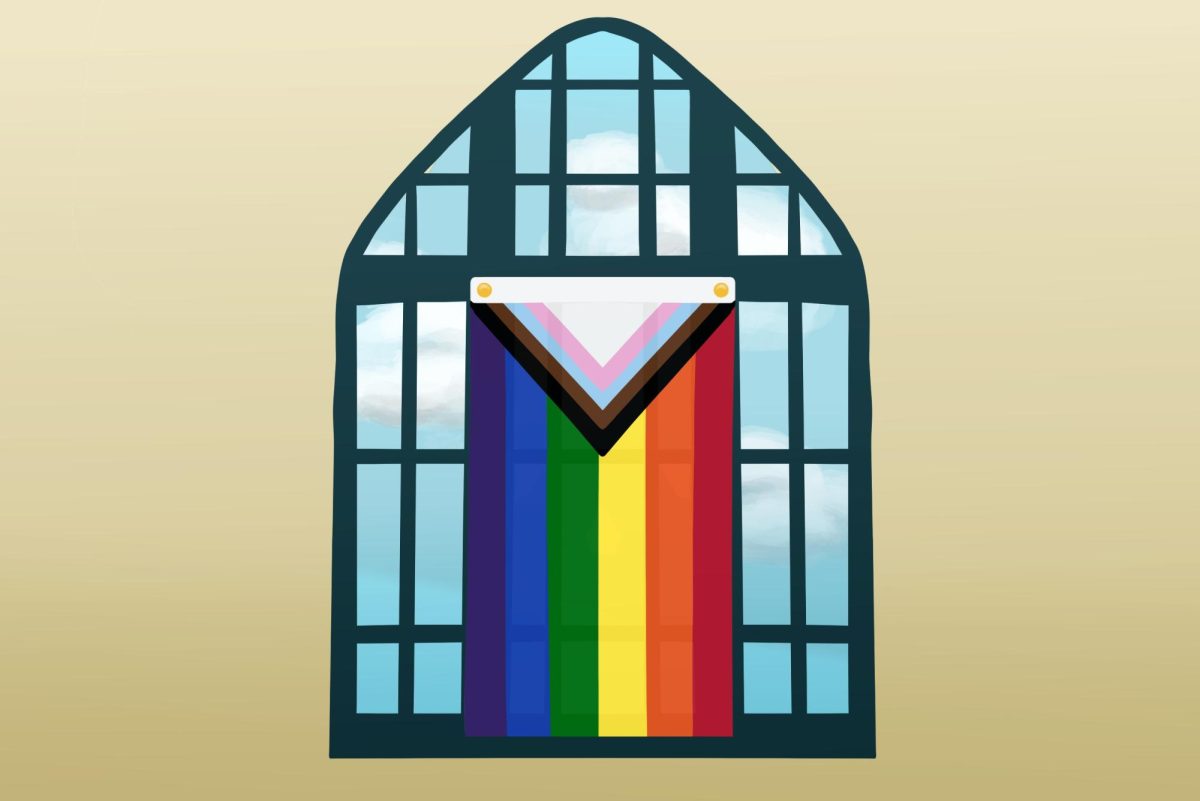


















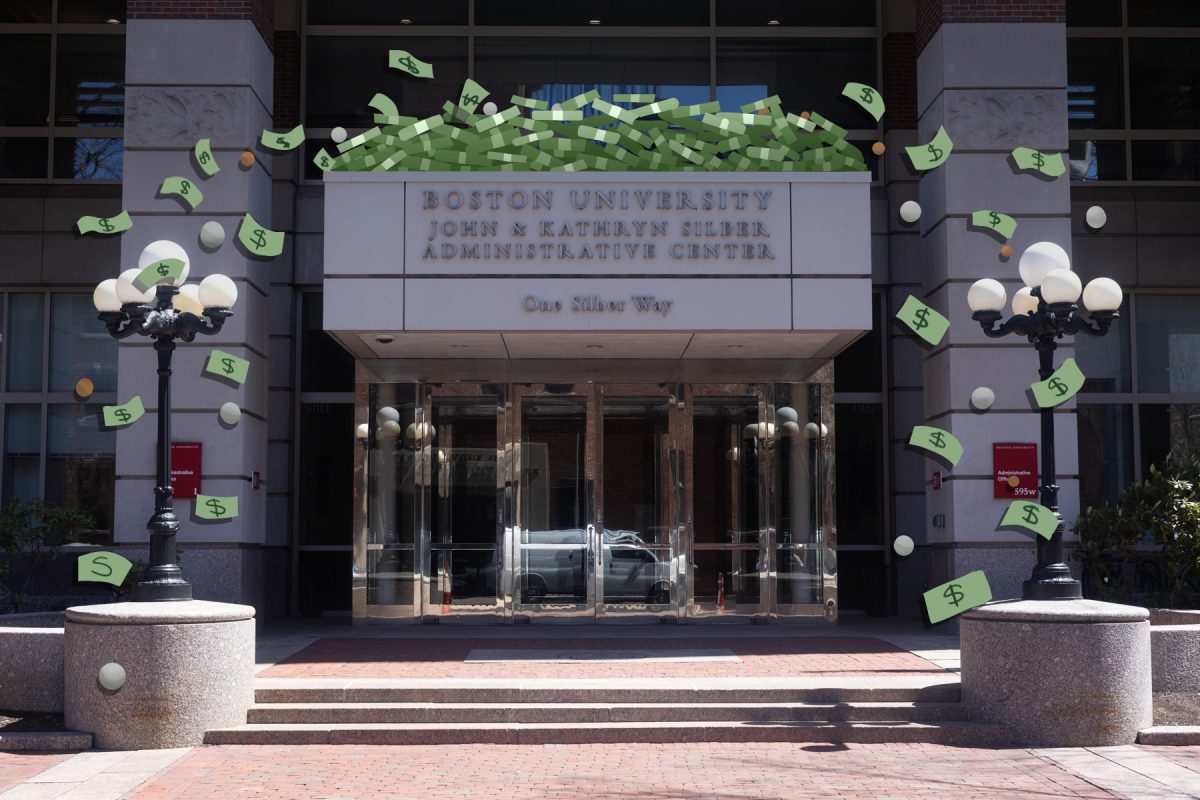


A Boston University alum who secured a landmark free speech victory for students in the 1980s sent a letter to University leadership this week urging it to reconsider its removal of outward-facing pride flags across campus.
Yosef Abramowitz, who graduated in 1986, was one of four BU students who won a lawsuit in 1986 against BU for the students’ right to hang banners from their windows.
Abramowitz wrote in the letter that he is “surprised” BU’s leadership has stripped pride flags from windows in recent weeks, adding that “we settled that question 40 years ago.”
At the time, Abramowitz and his peers hung banners reading “BU DIVEST” from their dormitory windows in protest of South African apartheid. The four students were expelled from their dormitories.
A Massachusetts Superior Court judge ruled that BU violated free speech rights and that the University could not remove the signs or force the students to remove signs, The New York Times reported in December 1986.
The letter — titled “Pride & Prejudice at BU” — was sent March 28 to BU President Melissa Gilliam, as well as the provost and Board of Trustees, according to Nathan Phillips, a BU earth and environment professor who shared the letter with The Daily Free Press.
A University spokesperson did not immediately respond to a request for comment by the time of publication.
Abramowitz invoked BU alumni in his letter, saying the removal of pride flags is out of step with BU’s legacy.
“I would expect the university whose legacy includes the Rev. Dr. Martin Luther King and Elie Wiesel to model courage and rebellion,” Abramowitz wrote.
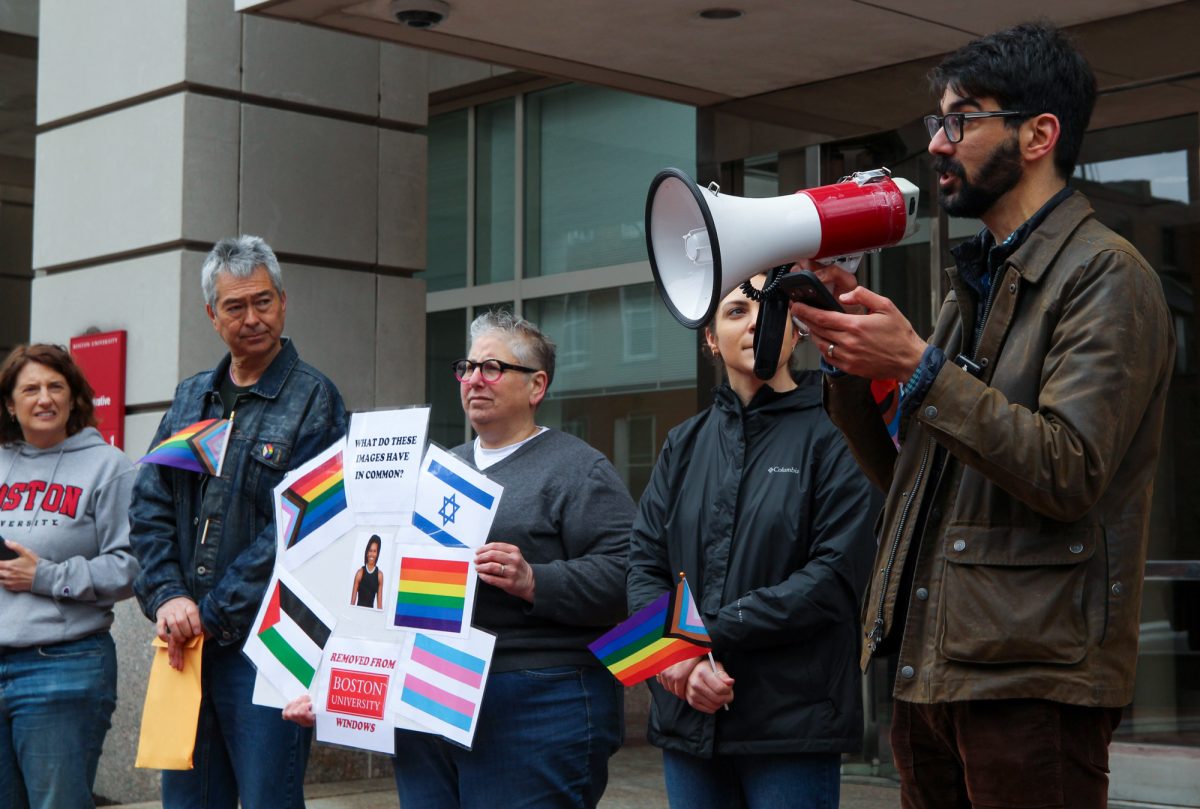
The letter stems from controversy over BU’s signage policy, which states that individuals can only post signage on authorized bulletin boards, but not on walls, windows or doors.
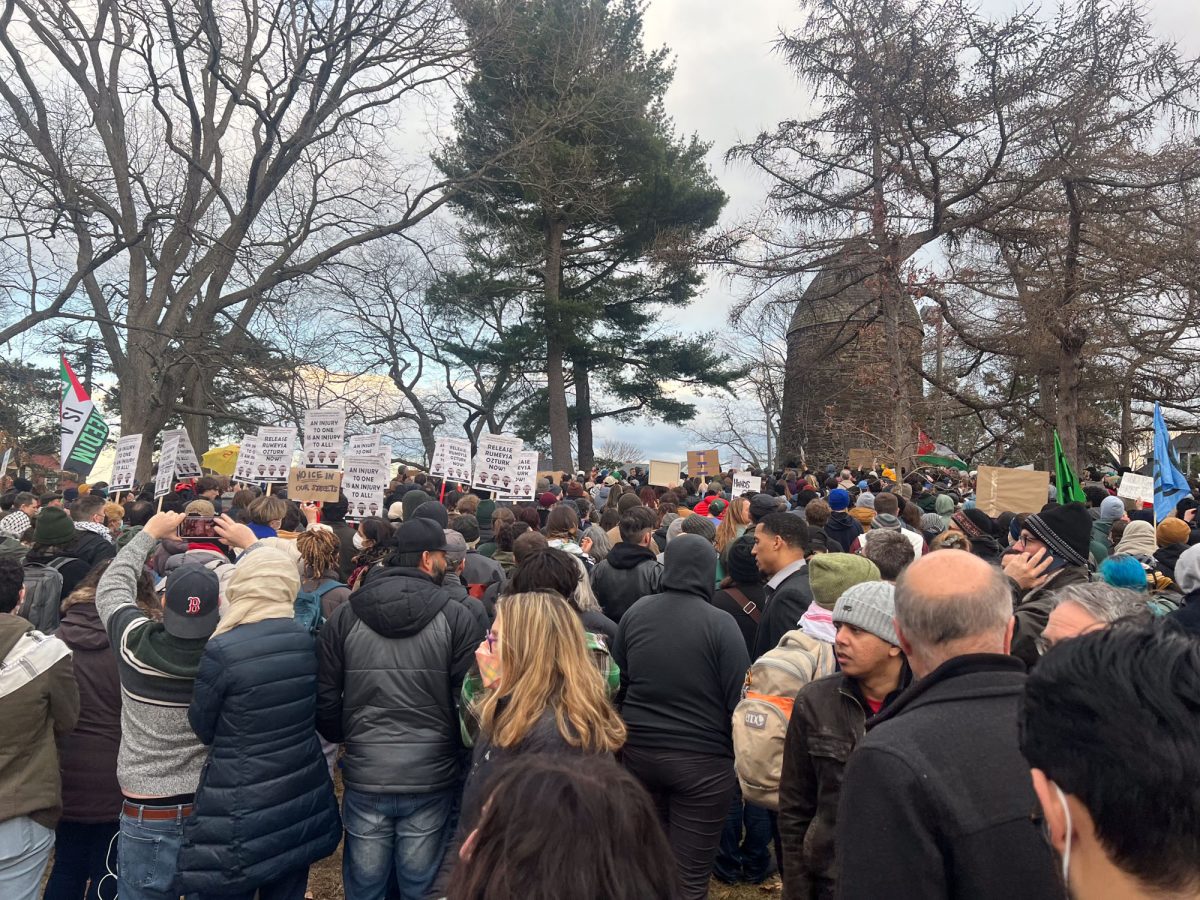
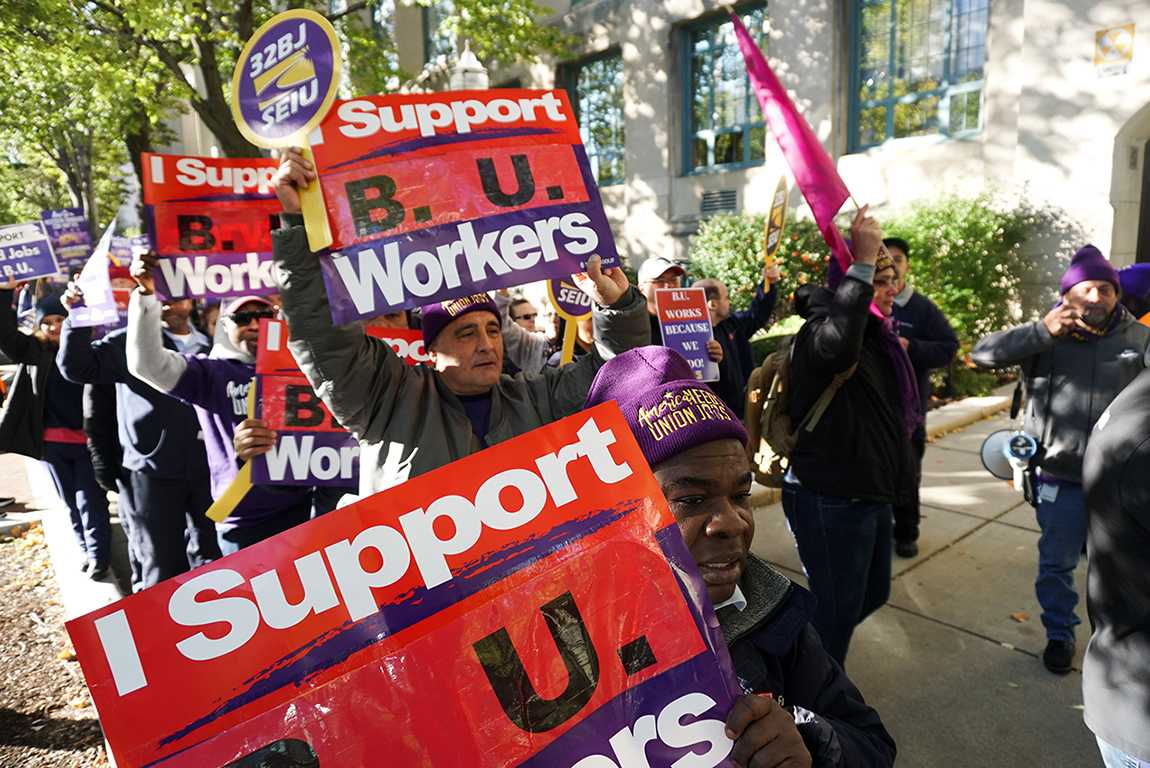
The policy’s enforcement, which has increased since last spring, has led to the removal of pride flags and political messages from office windows, prompting scrutiny and outrage from faculty, students and advocacy organizations.
Abramowitz wrote in the letter that the University had removed five “DIVEST” banners from the window of his dorm room, and that he had been threatened with expulsion twice.
“Removing public-facing pride banners may seem like a small sacrifice to dubiously keep Washington’s bullies at bay,” Abramowitz wrote. “But the decision was taken without consulting the faculty, the student body or, frankly, the law.”
Phillips has used his own office window to hang political messaging — “Free Mahmoud” and “Free Rumeysa,” as well as pride flags — which was inspired by the 1986 court case.
Phillips noted the letter as a moment that connected past and present activism on BU’s campus.
“It’s poetic justice. We’re reconnecting across four decades on an issue of social justice,” Phillips said. “This movement is growing space but also across decades of time. We’re reconnecting and it couldn’t happen in a better time, in the times we’re in with anti-democratic authoritarianism. This is like a breath of fresh air.”
Abramowitz wrote that after the win, the case became the “law of the land.”
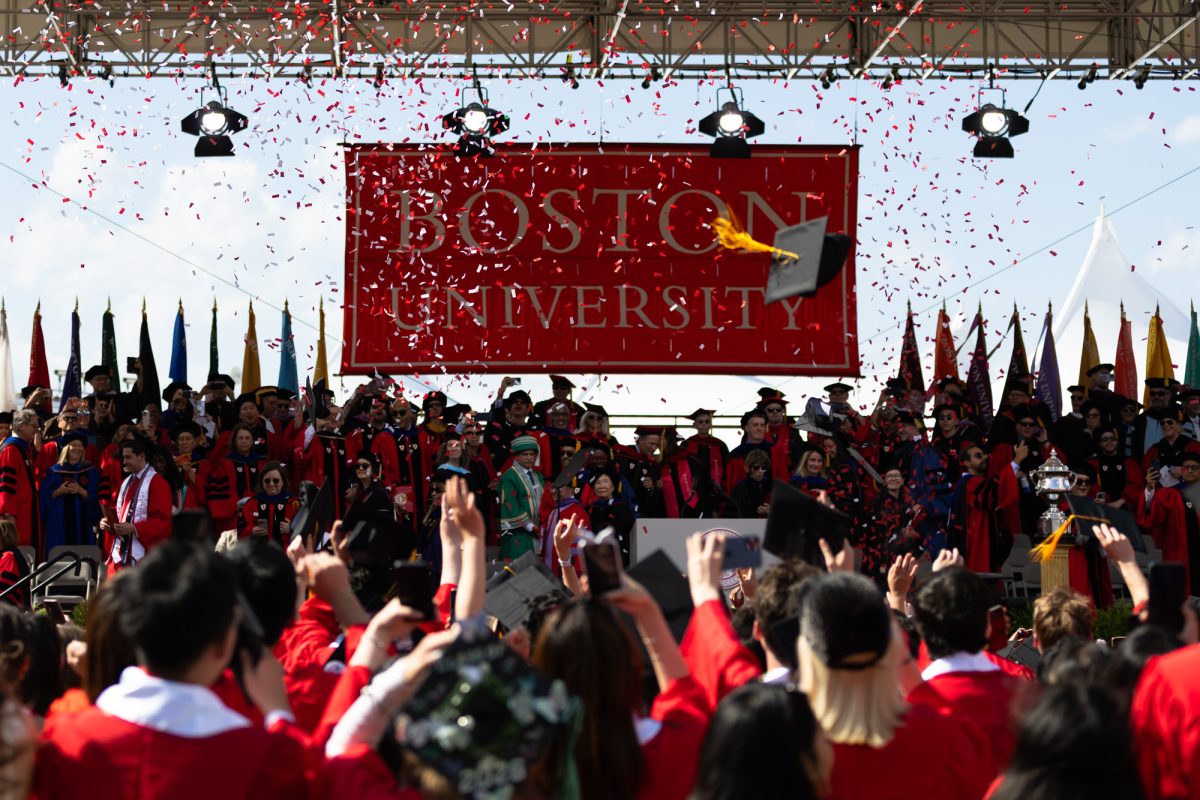
He called for a pride flag to fly at the podium at this year’s graduation ceremony, saying universities have a “special responsibility to model moral fortitude and leadership” during an “inflection point” in democracy.
“You conveniently have the luxury of being able to hide behind the Abramowitz ‘banner’ ruling from 40 years ago, with which Boston University should be proud to be associated,” Abramowitz wrote at the end of the letter.
Abramowitz, a former columnist for The Daily Free Press, currently serves as CEO of Energiya Global, which aims to develop affordable solar projects. He did not immediately respond to a request for comment by the time of publication.




Lisa • Apr 2, 2026 at 4:02 pm
I hope other alumni speak out – including law school alumni. The University’s position is a troubling one.