

































































Op-Eds do not reflect the editorial opinion of The Daily Free Press. They are solely the opinion of the author.
BU AAUP is the Boston University Chapter of the American Association of University Professors, an organization dedicated to protecting academic freedom and pushing back against attacks on higher education in the United States. This article is the first of a multi-part series documenting the suppression of free speech at BU.

Forty years ago, and again today, Boston University finds itself on the wrong side of Massachusetts law and history when it silences student and faculty dissent.
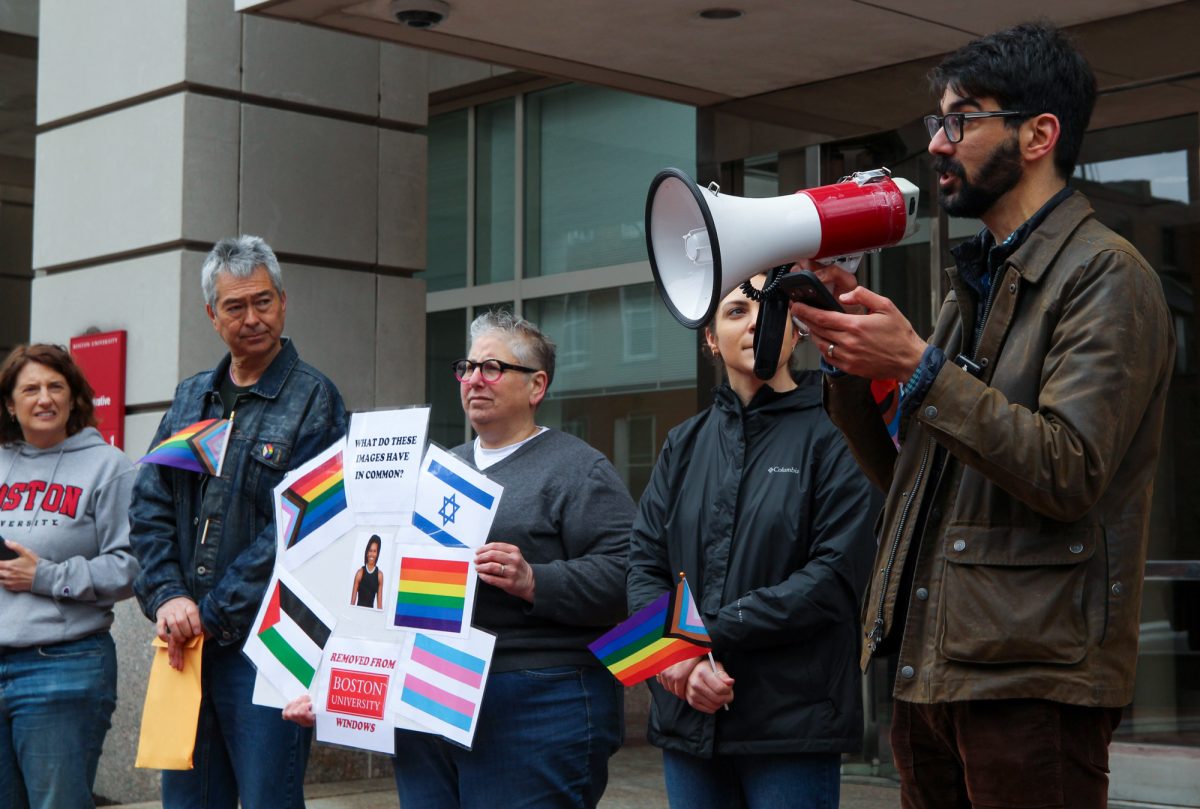
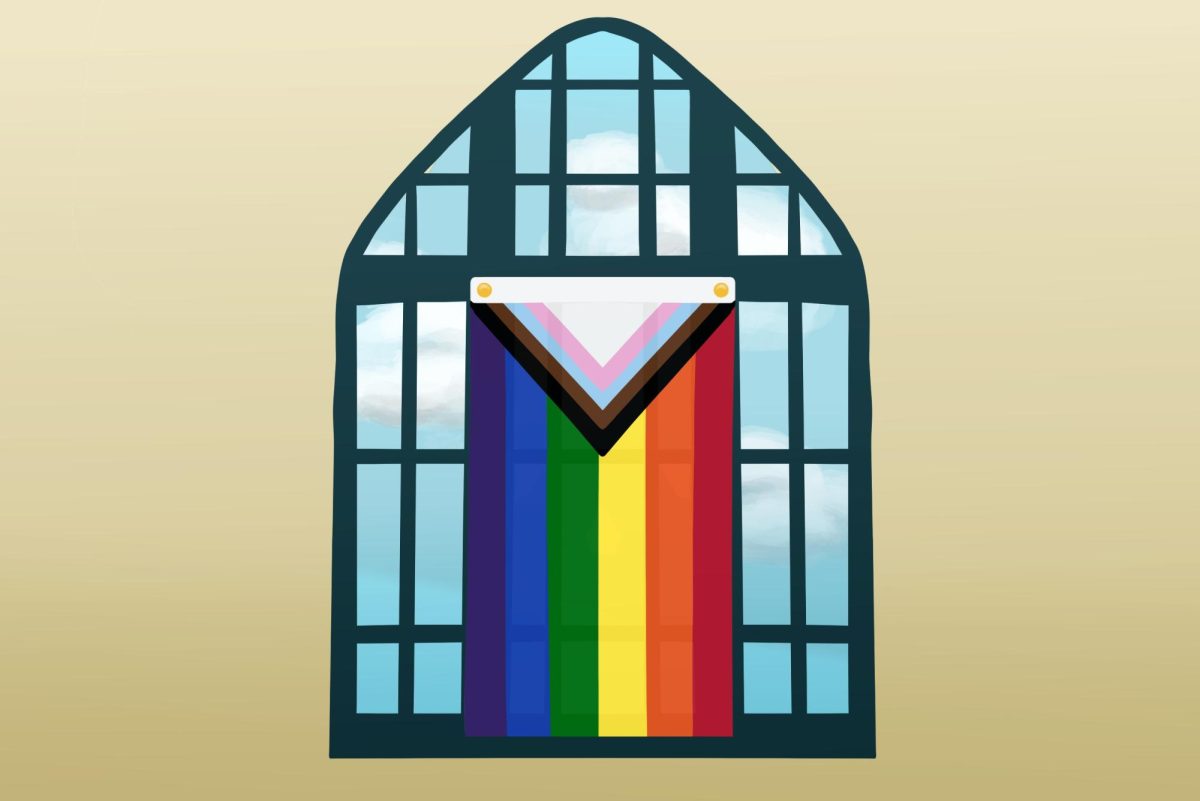
In the past few weeks, BU’s repressive stance on speech has been exposed — not just to our campus community but also to the nation. Between March 7 and 15, the school’s administration removed pride flags from the windows of various faculty offices. Despite outcry from faculty and students, the administration has doubled down and defended its actions.
This is not a one-off event. As you will read, the removal of the pride flag is consistent with the university’s troubling pattern of silencing political speech, and reinforces a history of suppression beyond today’s political moment.
Since taking office, President Donald Trump and his administration have made it a priority to ruin the daily lives of noncitizens, regardless of their legal status — both at the border and within. Going to work, attending medical appointments and school are now activities that carry heightened risks for detention and deportation.
International students have not been exempt from these attacks. On Jan. 29, 2025, President Trump — claiming he was intending to “combat anti-Semitism” in college campuses — issued an executive order directing federal agencies to monitor, investigate and ultimately remove certain non-citizens in universities.
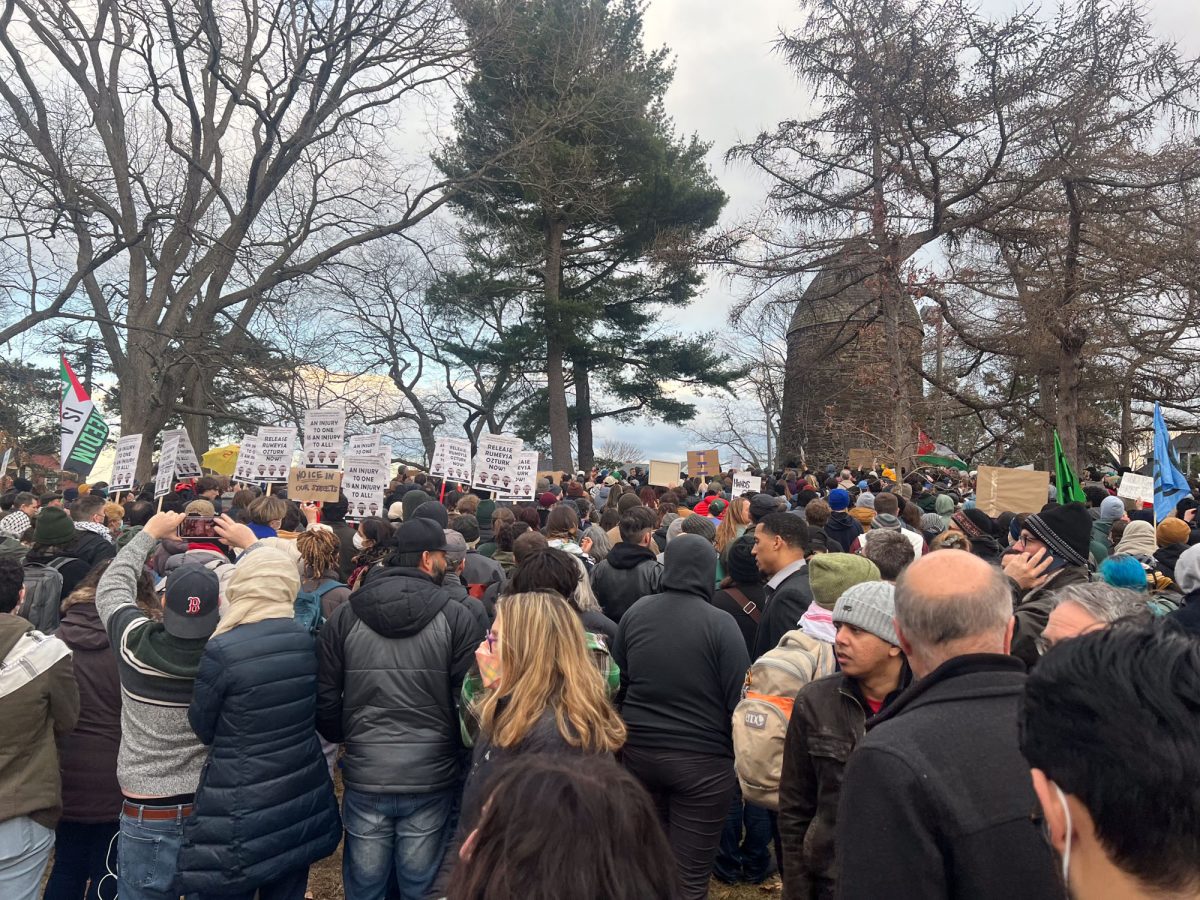
Tufts’ Ph.D. student Rümeysa Öztürk was one of these students. On March 26, 2025, six federal agents grabbed Rümeysa from the streets of Somerville and disappeared her into ICE custody. Rümeysa had a valid student visa, but her offense, from the administration’s perspective, was co-authoring an article critiquing her university’s “dismissive” response to the school’s senate resolutions that called on Tufts to recognize the genocide in Gaza and prohibit the serving of products made in illegal settlements in the Occupied West Bank.
After learning of Rümeysa’s disappearance, BU Professor Nathan Phillips, like thousands of others across our state, was moved to protest by writing her name on sheets of paper and taping them to the inside of his office window so others would read “FREE RÜMEYSA.”
He hoped to remind people walking down Commonwealth Avenue of her disappearance. After a week, the FREE RÜMEYSA sign was removed without Phillips’ consent or knowledge at the direction of BU’s administration. Phillips’ emails to BU facilities went unanswered.
He persisted in his protest by writing the name of Rümeysa and others disappeared by ICE, posting them repeatedly, only to have his handwritten words removed every time he left his office to teach class. As his signs were taken down, he observed other signs and banners stayed up.
When Phillips pointed out that the signage policy BU administrators cited against him only applied to students, the school then made the policy applicable across the university by simply posting it on the university policies’ webpage — opposed to the Dean of Students’ webpage where it had previously been posted. This is the policy the university now refers to when removing the pride flag from faculty office windows.
The university advanced this policy change curtailing faculty and staff expression covertly, silently and without regard to the school’s own pronouncements on free speech and expression and academic freedom.
Moreover, the restrictions imposed by the policy arguably violate the Massachusetts Civil Rights Act. Massachusetts law extends federal constitutional protections by limiting both private and public actors from interfering with a person’s free expression.
These recent incidents do not mark the first time BU would be violating this very law — indeed, BU targeted student speech under very similar circumstances 40 years ago. In 1986, in Abramowitz v. Trustees of Boston University, student activists took BU to court, suing under the Act when the university removed banners from their dorm rooms which called on the school to divest from South Africa’s apartheid government.
The university threatened students with eviction and expulsion. In his ruling against BU, Suffolk Superior Court Judge Haskell Freedman underscored that “nowhere in our society is the protection of the free flow of ideas more important than the university community, the quintessential ‘marketplace of ideas.’”
Haskell emphasized the university’s obligation to protect political speech in particular. When the university sent its employees into student rooms without their consent to remove anti-Apartheid banners, it violated the Civil Rights Act.
Rather than take a repressive approach to speech and regress to old habits, BU could claim another path by leaning into its own better legacy of protest and justice embodied by the school’s most famous alum Dr. Martin Luther King, Jr., who not only demanded a right to speech, but recognized time and again “the right to protest for right.”
To ensure that the university lives its values, BU AAUP monitors the suppression of free speech on campus, which has been growing. The university should protect expression and critical inquiry. Let speech bloom on campus, across our windows, from our throats and as we march down the city streets that line BU’s campus.
Please read this series of articles, and share it with your friends and colleagues. If you are a faculty member, join the American Association of University Professors, and demand that BU’s administration work with us to protect free inquiry above all else. If you are a student, a staff member or an alum of BU, join us in telling your stories and expressing your concerns in these pages. And join with more than a thousand others in signing the Terrier Courage petition to be delivered in person to President Gilliam.
Only by including faculty and students in University governance can we defend the fundamental values of higher education.