















































































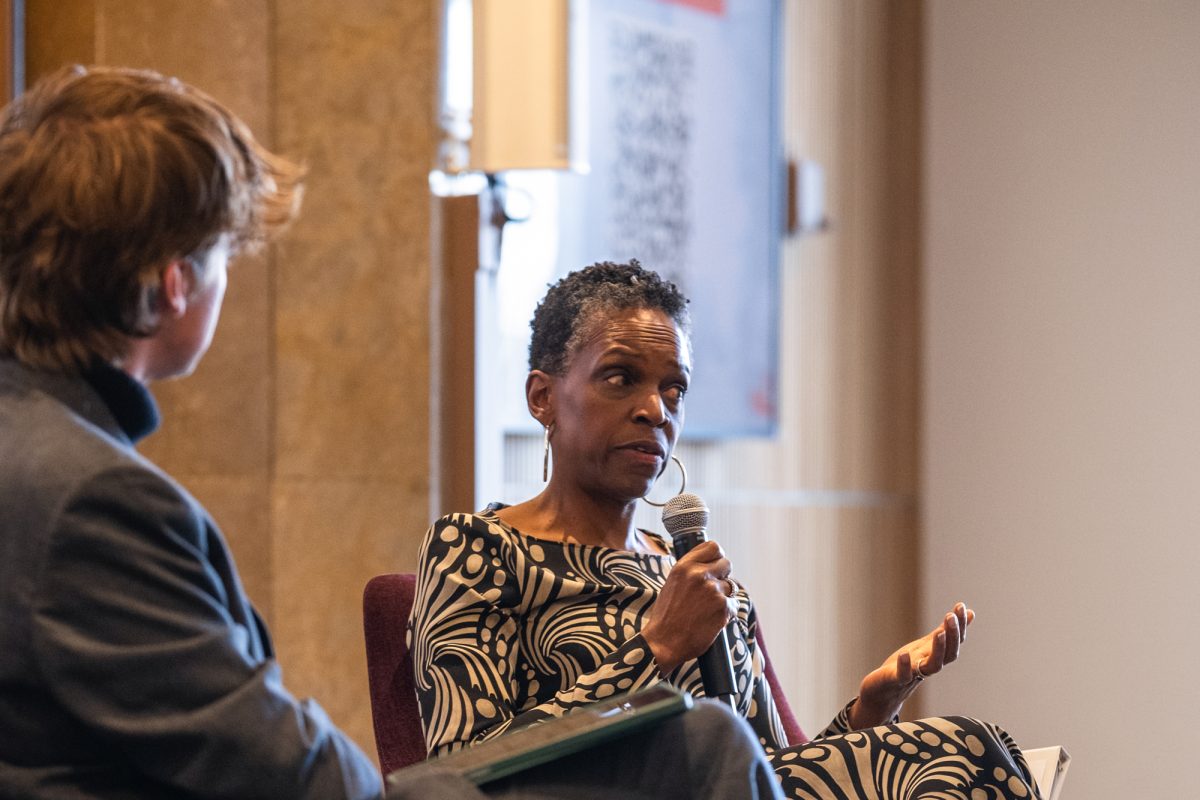
In a town hall event Monday, Boston University President Melissa Gilliam said the ban on outward-facing signage is a “decades-old policy” but acknowledged that “tensions and concerns have amplified” enough to warrant a change. The University is committed to supporting the LGBTQIA+ community, she said.
“At a time when people feel undervalued, there is nothing more important than knowing that … the administration sees and values that there are many groups that feel undervalued and are challenged at this point in time.”
At the town hall, which was hosted by Boston University’s Student Government in the Howard Thurman Center for Common Ground, Gilliam also discussed new campus initiatives and challenges facing the institution.
Approximately 30 students attended, many of whom were members of StuGov.
Cian Moss, the StuGov co-director of engagement, conducted the interview with Gilliam. He led previous town hall events and conducted the interview with Gilliam as part of a monthly town hall series, featuring conversations with different administrators.
“I think overall, it went very well,” Moss said in an interview. “She got to talk about her initiatives and we, as students, got to express our concerns.”
Student Government launched the series in September to foster campus conversations between students and different university leaders, Moss said.
Members of the audience were invited to submit their own questions via a QR code, which Moss read aloud to Gilliam.
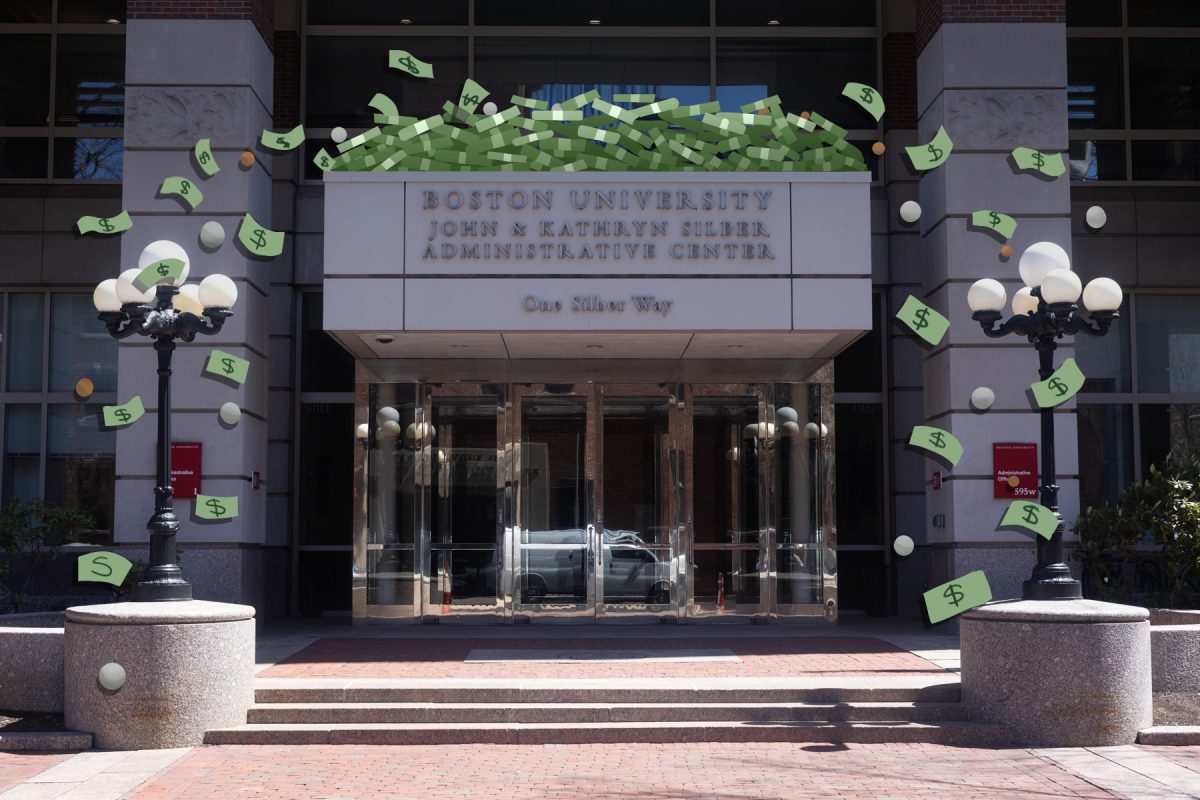
When asked about challenges facing the university, Gilliam said the University lost “significant amounts of money at the very beginning of last August.”
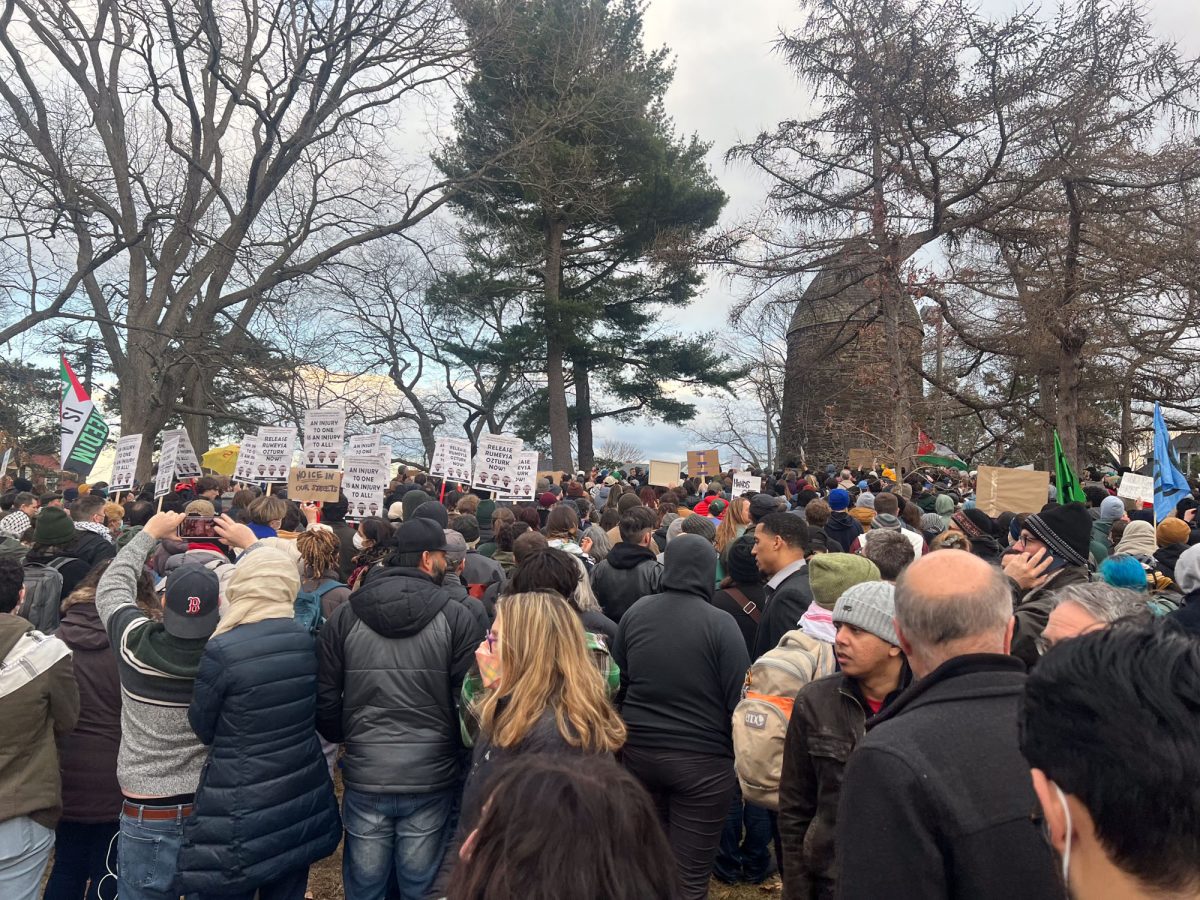
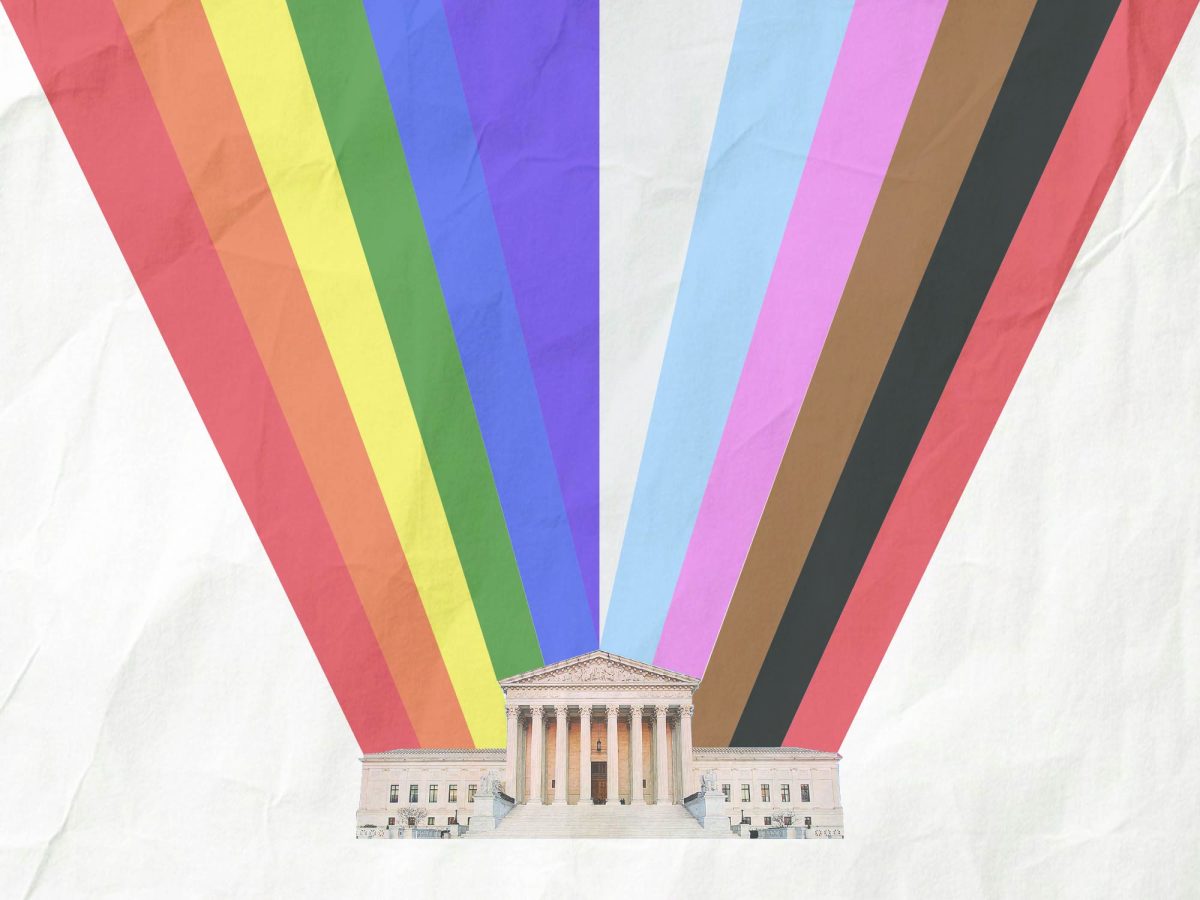
Questions on the removal of pride flags by BU administration were also brought to Gilliam, a recent issue that has received heavy backlash from the community. In an email hours before the event, Gilliam announced she was “temporarily pausing the removal of outward-facing signs.”
“I think a lot of students had some very passionate questions,” Moss said.
Before questions opened up to the audience, Gilliam announced new campus initiatives.
She discussed the creation of a new Chief of People Belonging Office, which aims to “empower” BU community members by creating policies and procedures to reward, evaluate and support development.
Gilliam also introduced a new undergraduate research program, “Launchpad,” which is intended to boost early career exposure through experiential learning.
With about 400,000 living alumni, BU plans on expanding its alumni network as well, she said.
Gilliam recounted efforts to improve communication, such as through her annual presidential address.
Freshman Angelo Guarino said he was unsatisfied with Gilliam’s responses, saying they were “a little bit dry” and sounded like they were “read off the website.” Guarino said he would have preferred to hear more “nitty gritty details” about specific policies.
“This was my first meeting,” Guarino said. “Perhaps in the future I’ll come with ready-made questions.”
Matthew Feliciano, BU’s student body president, said her responses were “pretty good,” and views her as an “idea generator” who speaks to the University’s key missions rather than the specifics of each initiative.
“I would have liked to hear more on the specific details, as opposed to just the overarching ideas,” Feliciano said. “But I don’t know if she’s even the right person to ask to be honest.”
Nonetheless, he said he appreciated the opportunity for students to talk with Gilliam.
“It’s just really impactful and really helpful to have such a high-level administrator come and be willing to talk face-to-face with students and answer questions directly, especially on pressing concerns that a lot of people have,” Feliciano said.


