





































































Somewhere between the invention of the smartphone and the widespread implementation of artificial intelligence, modern culture has convinced itself that speed is the supreme virtue, and that any unoptimized time is a waste.
Just look at the rise of the “zero-click search.” Recent data reveals nearly 60% of Google searches end without a single website click as users increasingly prefer AI overviews. In one of the earliest user experience studies conducted on Google’s AIOs, roughly 86% of participants briefly skimmed the overviews for “helpful points or recognizable sources,” spending between 30 to 45 seconds engaging with the content.

In a consumer-driven economy like the United States, conversations surrounding the zero-click search are largely focused on how this phenomenon affects marketing tactics and purchasing patterns — every company wants to meet consumers where they are.
But at what point are corporations too blinded by profits to realize that the zero-click search is eroding one of our most basic and primal instincts: curiosity?
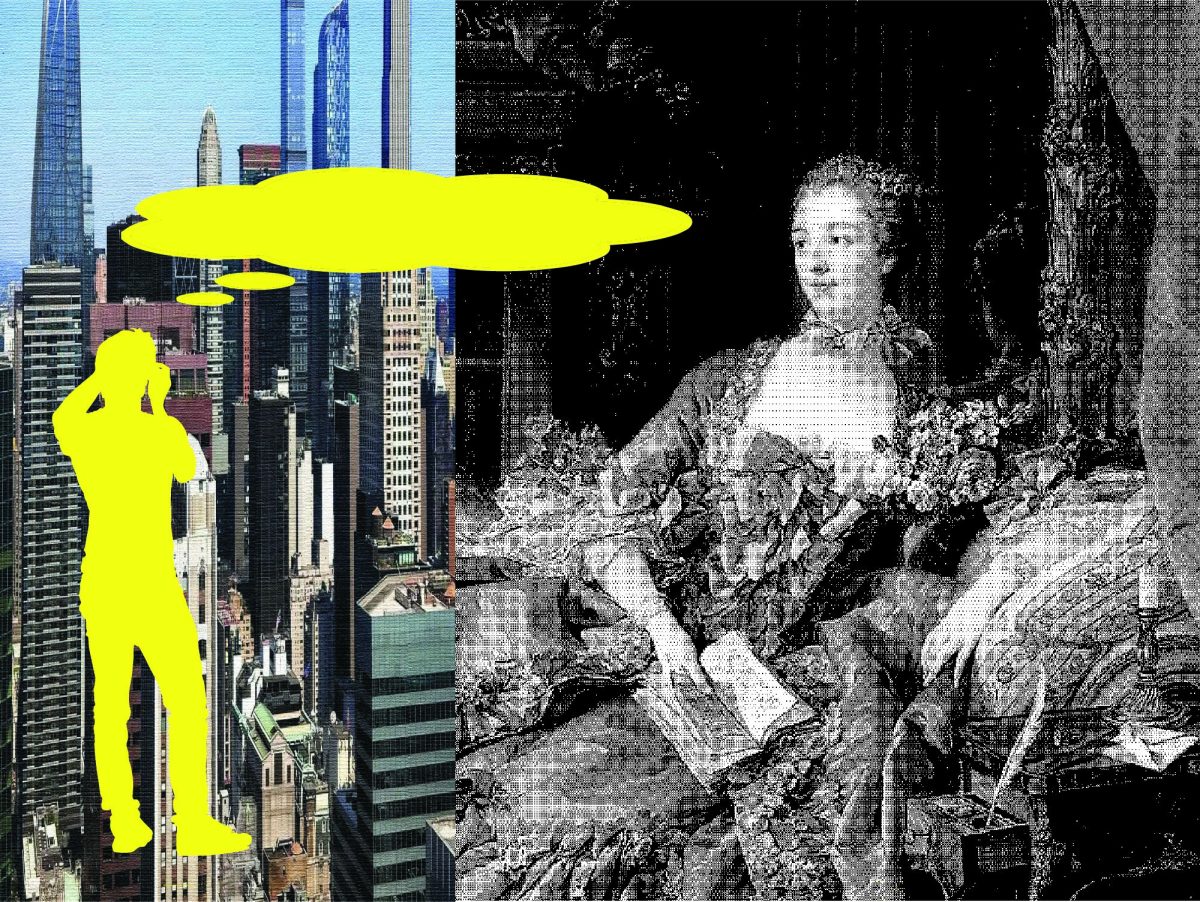
Our contemporary relationship with speed reframes the practice of research as resistance to society’s obsession with immediacy.
Nowhere is this more visible than in fashion — an industry faced with constant pressure from fast fashion, accelerated trend cycles, dupe culture and AI. But it’s amid these threats that creatives’ in-depth research processes bring innovation and intention to the forefront of the field.
Take Chanel’s Matthieu Blazy as an example. Blazy, who was recently named one of Time Magazine’s 100 most influential people of 2026, is a living testament to how a researched approach breathes new life into an industry whose attention, let alone praise, is almost impossible to capture.
Blazy’s transition to Chanel’s creative director — following his departure from Bottega Veneta in December 2024 — was the most anticipated debut of the season amid a sea of new creative directors taking the helm at major fashion labels.
But for those who follow fashion closely, the intrigue surrounding Blazy’s introduction was less driven by spectacle than by curiosity surrounding the extensive research and references that would underpin the garments.
Blazy’s approach to his first haute couture show for the spring/summer 2026 season demonstrates how research can take many shapes in the creative industry.
For Blazy, the starting point of his research journey was an anonymous haiku: “Bird on a mushroom / I saw the beauty at once / Then gone, flown away.”
Oftentimes, research is grounded by a fundamental question that propels exploration. At a preview, Blazy recalled stumbling across the haiku and asking himself, “Can I tell a story with those three lines?”
According to Vogue Runway Global Director Nicole Phelps, the Chanel team took an immersive approach to ideating the collection from there.
In her review of the show, Phelps explained, “… because birds were the organizing motif — avians of every stripe were pinned to boards in the Chanel studio — there were feathers both real and in representation.”
Blazy’s research also led him to Chanel’s archives to better understand the heart and origin of the brand. For his modern reimagination of couture, Blazy ultimately sought to “do as Coco Chanel once did” — design for the women in motion.
Three lines and a deep commitment to the research process were enough for Blazy to transform the Grand Palais into a fairy-tale land complete with pink willow trees and oversized colorful mushrooms, garnering praise for his imagination and sending the media into a frenzy.
It’s clear Blazy’s inspiration and research paid off with his first collection, but what is the result of under-researched creative work?
Recently, I was scrolling on TikTok — which, by the way, is not a reliable source for research, but I digress. I stumbled across a video posted by American musician Moses Sumney that was so simple, yet so true.
“Mira, if you’re going to write essays on Substack, might I suggest kindly, also reading. [Because] a lot of you like to be read, but you don’t read, and it shows,” he said, painfully straight-faced.
The comment section was full of remarks echoing the same sentiment.
“We need to bring back MLA format. Sources. Studies. Articles!” one commenter wrote.
“I downloaded substack because I wanted to understand other people’s ideas through the nuance only reading could offer. little did I know that half of substack [is] just rants about pop culture packaged as essays,” another commenter wrote. .
Both comments received thousands of likes.
In an already competitive and oversaturated attention economy, under-researched work is nothing more than lukewarm takes added to the echo chamber that social media continues to amplify.
Recently, we’ve been convinced that resistance needs to be visible. Between boycotts publicized across social media platforms, protests, rallies and petitions — all of which are real means for change and their effectiveness should not be undermined — we forget that defiance of new social norms can happen on the individual level.
Today, researching topics of interest in-depth before producing content, or even for your own enjoyment, puts you in the dwindling minority as the zero-click search flattens society’s perspective.
So before you look to produce, ask yourself if your foundational understanding is even strong enough to add meaningful discourse to the conversation. If not, maybe reconsider. Or just do your research.