




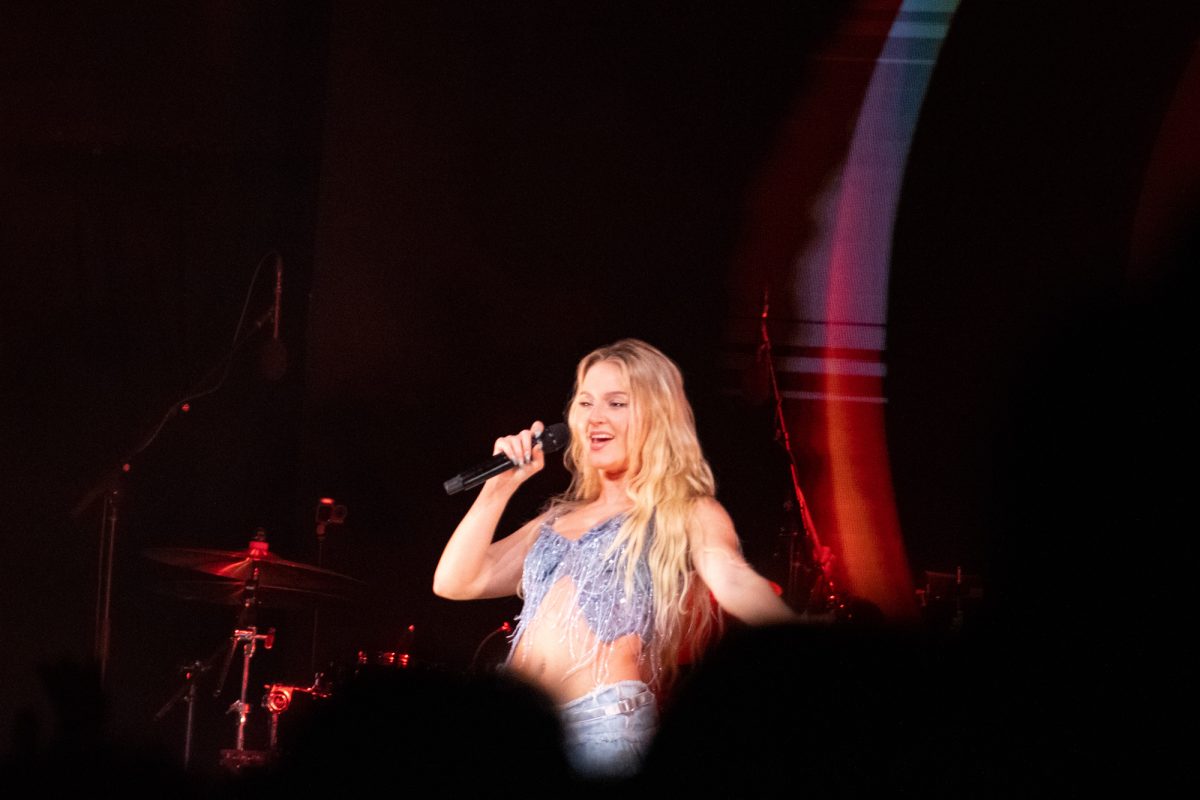










































































On April 10 and April 11, Sabrina Carpenter and Justin Bieber headlined the first weekend of Coachella at Empire Polo Club in Indio, California.
Carpenter performed on Friday, giving the audience a taste of her last two hit albums “Short n’ Sweet” and “Man’s Best Friend,” as well as her other popular songs. Inspired by both Broadway and Hollywood productions, her Coachella set involved several outfit changes and scene shifts.
Bieber took a different approach, stripping it back, playing YouTube videos of his greatest hits from a range of eras via his Macbook.
Many viewed Bieber’s set as nostalgic. Fans were excited to see him back on the big stage after the cancellation of his “Justice” world tour in 2023 due to his Ramsay Hunt syndrome diagnosis.
The difference in sets, despite both being from headliners, aroused some controversy. Many noted the discrepancy in both production level and overall effort.
But Carpenter’s elaborate production and set for the music festival raised an essential question that we must ask ourselves.
Would we have been more disappointed or critical if Sabrina Carpenter whipped out her laptop to sing “Espresso?”
The answer is an obvious yes, highlighting a difficult and sexist double standard.
In her 2020 “Miss Americana” documentary, Taylor Swift explained how, “The female artists that I know of have to remake themselves 20 times more than the male artists, or else you’re out of a job.”
It’s hard enough for female musicians to navigate such a competitive industry, let alone while traversing conflicting gendered expectations.
Artists like Ed Sheeran have the luxury of showcasing their natural talent without the same extent of maximalist production as Sabrina Carpenter or Taylor Swift.
“Be new to us, be young to us — but only the way we want,” Swift said in the documentary regarding the public’s perception of female artists. “Reinvent yourself but only in a way that we find to be equally comforting and a challenge for you. Live out a narrative that we find interesting enough to entertain us, but not so crazy that it makes us uncomfortable.”
Female music artists not only have to continuously reinvent themselves, but as Swift depicts, they have to make sure that their new self is a concept or version that the public will accept.
People love what’s new, but female artists must make transformative and reconstructive changes to stay relevant. It’s this ever-changing mold that women are either condemned for not fitting or momentarily celebrated for abiding by.
They have to continuously break the mirror of themselves into as many pieces as possible — “constantly having to reinvent, constantly finding new facets of yourself that people find to be shiny,” Swift said.
This system is not just unfair, but exhausting. We allow ourselves to be influenced by headlines, posts and tabloids that highlight women’s flaws and only their achievements when it’s convenient, or if they’ve finally reached the impossible standards set forth by systemic norms.
Many male artists can escape backlash by undergoing minor revamps over time. Drake, one of the most successful male artists of all time, has profited off a consistent persona with subtle changes over time to account for different eras. In a female artists’ position, he would likely be criticized for stagnating or failing to evolve.
Sometimes these reinventions fail. With any artist, the individual is tasked to outdo all their previous work or else their new project is often considered meaningless.
Often, female artists are not only forced to drastically change in some capacity, but still remain recognizable. One of a female artist’s most defining physical characteristics is their hair. When Katy Perry shaved and dyed her hair into a blonde pixie cut, she abandoned her signature black locks and occasional colorful highlights — a defining move of her “Witness” era.
While her hair was only a contributing factor, her transformation in this era caused her brand identity to suffer immense consequences. The reception to her album was just as harsh.
Most members of the music industry have some form of a survival strategy or tactics to remain relevant, but between men and women, the stakes of survival are starkly different.
Perry is only one example of a female artist attempting to catch the unbelievably fast train of sexist relevance and narrowly missing its doors.
We must address not only our double standards but our disproportionate ones. Why must a female artist work so much harder to remain successful? What does that say about our own perspectives versus the artists themselves?


