



















































































Dear Abby: My boyfriend and I have been dating for eight months now and he’s great! But sometimes I worry he’s become a little controlling over my social life and how I act. Am I reading too much into it or is this just what people in love do?
There’s an inherent sense of possession that permeates throughout most relationships. It’s almost idealized at first. A lot of people bask in the idea of “belonging” to someone in the context of being their girlfriend or their boyfriend — exclusive, chosen and bound by a sacred bond.
But let me be the first to raise a flag: There’s a fine line between belonging to someone and losing ownership of yourself.
Because what starts as “you’re mine” can slowly turn into “you can’t.”
You can’t wear that. You can’t go there. You can’t be that version of yourself anymore.
Or maybe your partner doesn’t explicitly phrase it as a “can’t.” It could be a sigh. A tone shift. A “do whatever you want” that doesn’t really mean that at all.
Some argue that relationships come with boundaries — and they do. But there’s a difference between boundaries and control, and too often, we confuse the two.
Boundaries protect you. Control restricts someone else.
I started to wonder,when does love stop feeling like attention and start feeling like permission? And more importantly, why are we so quick to confuse the two?
Quick facts
Research in areas like social psychology and gender studies shows that controlling behaviors do tend to be more commonly reported by women in heterosexual relationships, meaning women are more likely to be on the receiving end. This includes things like monitoring, jealousy framed as “care,” isolation from friends and subtle decision-making control.
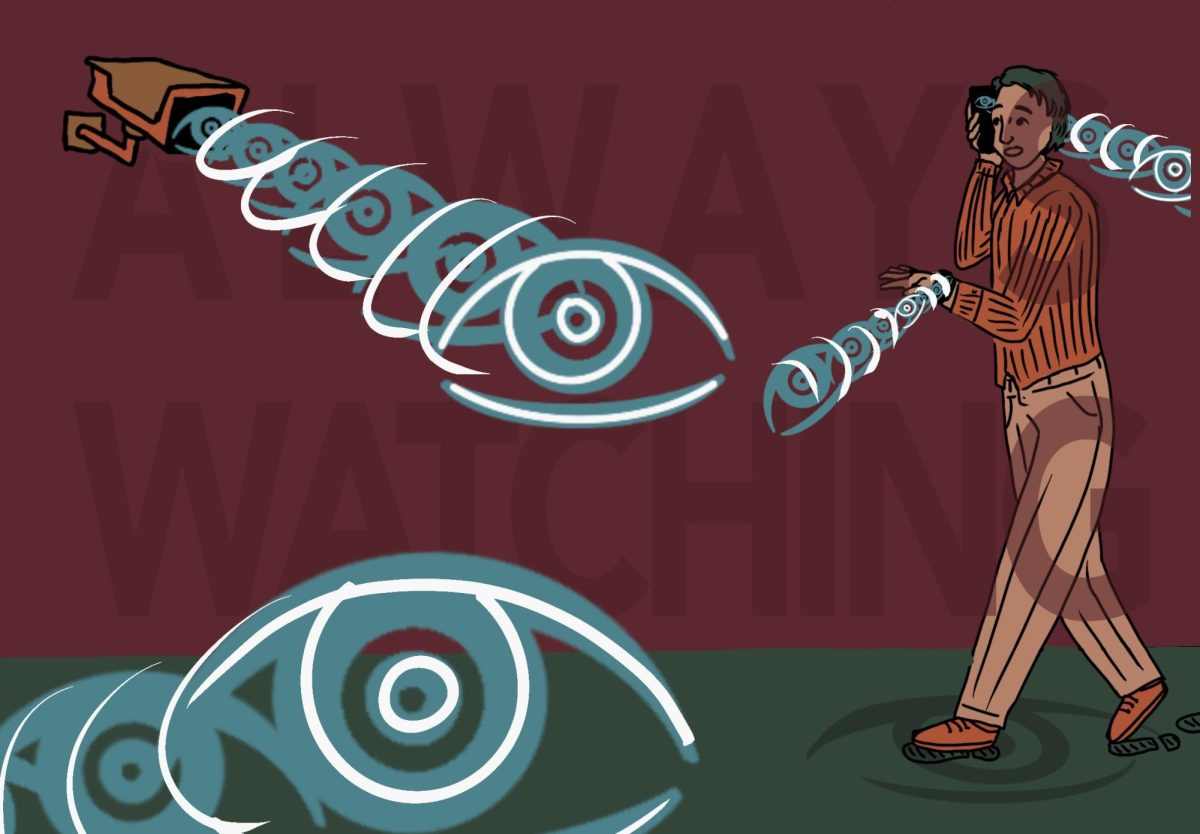
In terms of Gen Z relationships, researchers also note that controlling behaviors are often shaped by digital culture — constant online access, social media visibility and apps that make it easy to monitor a partner.
Younger people don’t always recognize these behaviors as problematic, especially when they’re framed as care or concern. In fact, it seems a lot of Gen Z values these behaviors.
One TikTok user captioned a video they made: “I lied. I like being controlled. I like being told ‘you’re not wearing this.’ I like when he’s jealous. I like when he’s a lil crazy. I like being the center of his world.”
It seemed a bit odd that a woman would agree with these very direct lines of control, but much of these feelings link back to the preference for a dominant partner, not necessarily a controlling one.
A 2024 study of 172 adults found that people who prefer dominant partners are often driven less by a desire for control and more by a desire for stimulation. Participants who were easily bored or more impulsive were especially likely to be drawn to partners who take charge, suggesting that what feels like attraction is often tied to excitement, not power.
But that’s where the disconnect begins. The same traits that initially read as confidence, decisiveness or excitement can quietly blur into control. Because the attraction is rooted in how the dynamic feels — stimulating or stabilizing — people are more likely to overlook the moment when “taking charge” becomes limiting.
Keep your eyes peeled for these controlling behaviors
First and foremost, your partner does not get to dictate what you wear — not jokingly or “out of concern.” You are not an extension of someone else’s image or ego. You are your own person, and your clothing is part of how you express that.
How someone dresses has absolutely nothing to do with their self-respect, their values or their commitment to a relationship. That idea has been used for decades to shame, limit and police people — especially women — and it still shows up today disguised as “respect” or “boundaries.”
Another thing to watch for is control over your social life and friendships.
This rarely begins as an outright prohibition. It’s usually more insidious — comments like, “Do you really need to go out again?” or “I just wish you’d spend more time with me,” or subtle disapproval every time you make plans that don’t include them. Over time, what should be a normal, healthy part of life — maintaining friendships — starts to feel painful.
In a healthy relationship, your social life is not a threat. It’s understood as essential. Friendships provide perspective, support and a sense of identity that exists outside the relationship,
A third thing to be aware of is financial control such as questioning your purchases or discouraging your independence. Perhaps they will position themselves as the one who “knows better” about spending money.
Your finances are your finances period – especially when you’re just dating.
Control doesn’t just show up in what you do — it shows up in what you’re allowed to express emotionally. It’s being told you’re “too sensitive” when something hurts you, or “dramatic” when you react. Over time, you start filtering your own emotions to avoid conflict, shrinking your reactions to keep the peace.
One of the most important signs of manipulation is double standards. The same behavior that’s acceptable for them — going out, posting or having certain friendships — becomes a problem when you do it. These double standards aren’t random; they reinforce an imbalance where one person operates freely while the other is expected to adjust.
The most confusing form of control is the kind that calls itself a boundary. Healthy boundaries are about what someone will do for themselves — not rules placed on someone else.
But control often borrows that language: “I just don’t want my partner to…” or “I need you to…” It sounds reasonable, even mature, which makes it harder to question. The difference is subtle but important — boundaries protect autonomy, while control restricts it.
You own your life

I get it — there’s a novelty to feeling like you are the most important person in the world to someone. It’s flattering when someone cares about every choice you make, from what you wear to who you spend time with or even how you express yourself.
That attention can feel exciting, like proof that you matter, that you’re loved. But that same closeness can also blind you. It can mask controlling behaviors that, in the moment, don’t feel like control at all. You might not notice it until you’re so far in that stepping back feels complicated — or even impossible.
When I say you own your own life, I mean it — uncompromisingly. By the time we reach college, we’re adults with autonomy, with a sense of personhood that isn’t dictated by anyone else, romantic partner or otherwise.
The moment you start shrinking to fit someone else’s version of “perfect,” it’s no longer a relationship — it’s control disguised as care. Remember: being loved should never require giving up yourself.