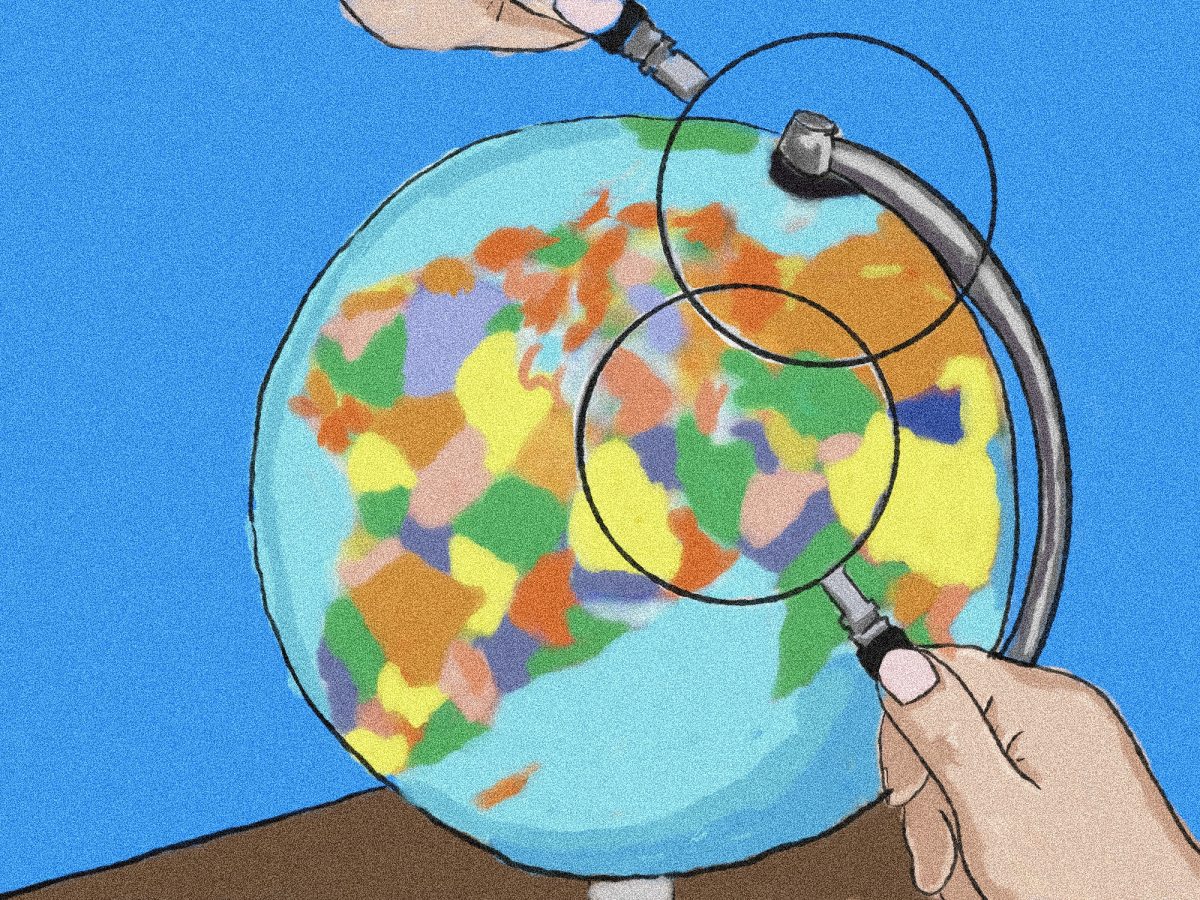










































































































Very frequently, we hear Africa described in the news as poor or underdeveloped. This view is misleading and overlooks a deeper reality. The continent is incredibly rich in resources such as oil, diamonds, gold and other rare minerals. The issue is not a lack of wealth, but who controls it and who benefits from it.
This pattern began during the Scramble for Africa in the 1800s, when European powers divided the continent among themselves and restructured entire economies to serve their own exploitative interests. Roads, railways and ports were designed to move resources out of Africa and into Europe. The Uganda Railway, built by the British in Kenya, connected inland areas to Mombasa so raw materials could be shipped to European states instead of supporting local communities.

This infrastructure did not just move goods, but it also disrupted trade networks and redirected economic activity away from local markets. The railway was built using forced and coerced labor and pulled men away from their own farms and families. These same local economies that were functioning independently were now being restructured around colonial extraction.
A similar pattern happened during the Belgian Congo colonial period, where production at rubber plantations was enforced through violence and coercion. What strikes me the most is that these were not just separate events: They were planned and organized systems meant to take as much as possible from African people without empathy about the communities left behind. Centuries ago, African economies were constructed to serve foreign interests.
Even after African countries began gaining independence in the mid-1900s, these systems remained entrenched. One significant example of this is the diamond industry in Botswana. Often seen as a success story, Botswana’s diamond sector is dominated by De Beers — 85% owned by Anglo American Group, with the Botswana government holding just 15%. The diamonds come from Botswana, yet the country has minimal control and influence over its own most valuable resource.
Diamonds account for roughly 80% of Botswana’s export earnings, which means the entire economy is heavily dependent on a single resource that is largely controlled by a foreign company. The profits that leave the country through De Beers go to Anglo American’s shareholders, who are largely based in the United Kingdom and South Africa. While Botswana has used its diamond revenue to fund some public services, there is a structural imbalance.
When diamond prices fall, Botswana ends up bearing the consequences without having full control over the situation. A country should not have to hope that a foreign corporation makes the right call in order for its own people to benefit from their own land. This reflects a broader pattern across Africa, where profits from natural resources are exported rather than used to benefit local areas.
The Dependency Theory offers an explanation: Poorer countries are locked into a global system where they supply raw materials while wealthier countries profit from turning those materials into finished products.
When profits leave the country, governments have less money to spend on necessities such as schools, healthcare and infrastructure, directly impacting common people and leading to slower development in the country.
Resource wealth becomes a cause of instability rather than opportunity. Competition over valuable resources can also lead to corruption or conflict because different groups are trying to control the wealth, making it harder for the average person to benefit from the resources in their own country.
Conversations surrounding Africa’s economic issues often focus only on domestic governance while ignoring the global systems that shape these outcomes. Governance does matter, but it is connected to a larger global system that has historically favored powerful countries and corporations.
This is not accidental. It is the consequence of a system that has long prioritized extraction over development and profit over community prosperity.
Independence for these nations in the 1900s did not, unfortunately, change who controls the region. Governments changed while the systems stayed the same. Real progress requires shifting control over resources and profits back to the countries they came from. That means policy changes within African nations, but also fundamental reform of how the global economy is structured.
To me, this would be renegotiating trade agreements that were never designed with African communities in mind. This also includes reforming institutions like the IMF and the World Bank, whose loan conditions have historically pushed African governments towards policies that focus on paying back loans instead of investing in their own communities.
These are not extreme ideas — they are basic standards any economy requires to grow independently. Without this change, unequal global systems will continue to benefit other states instead of local or regional economies.