






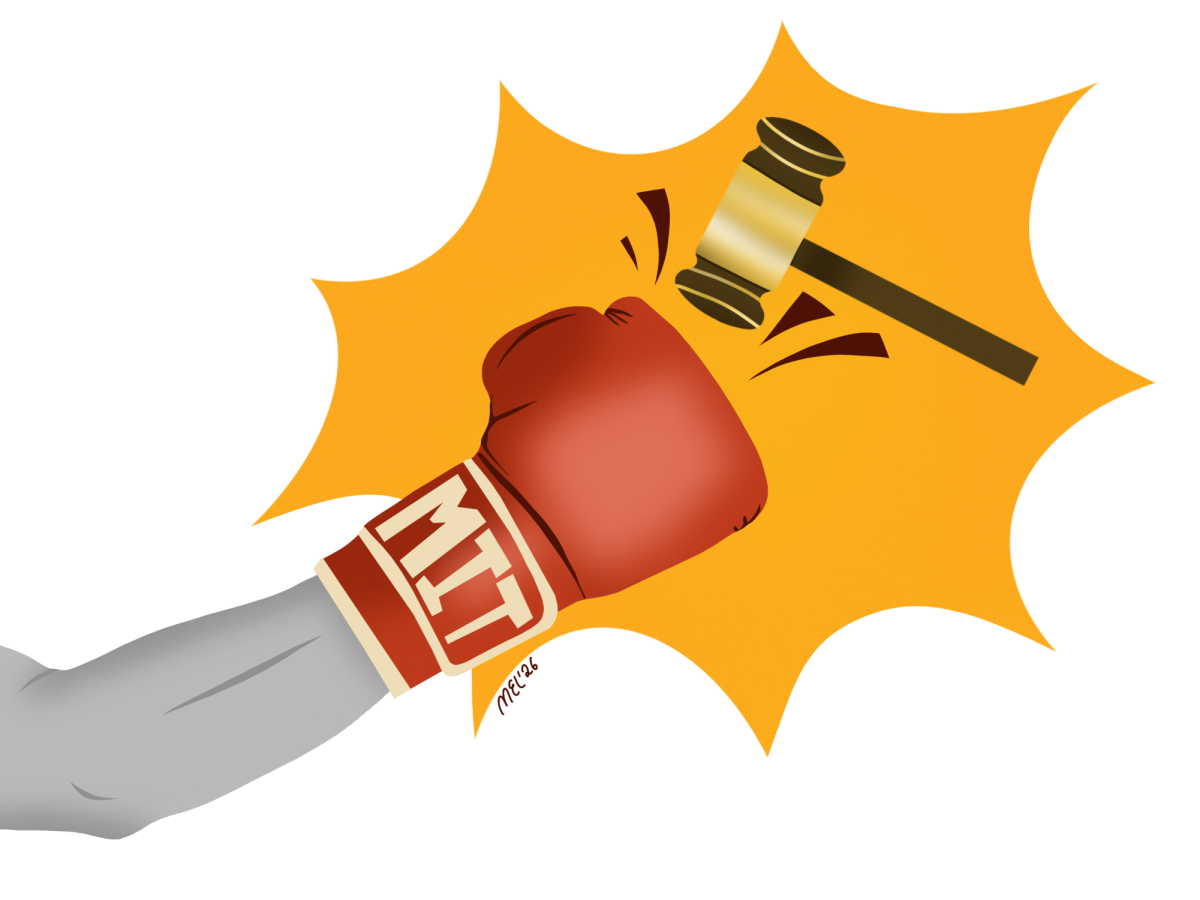










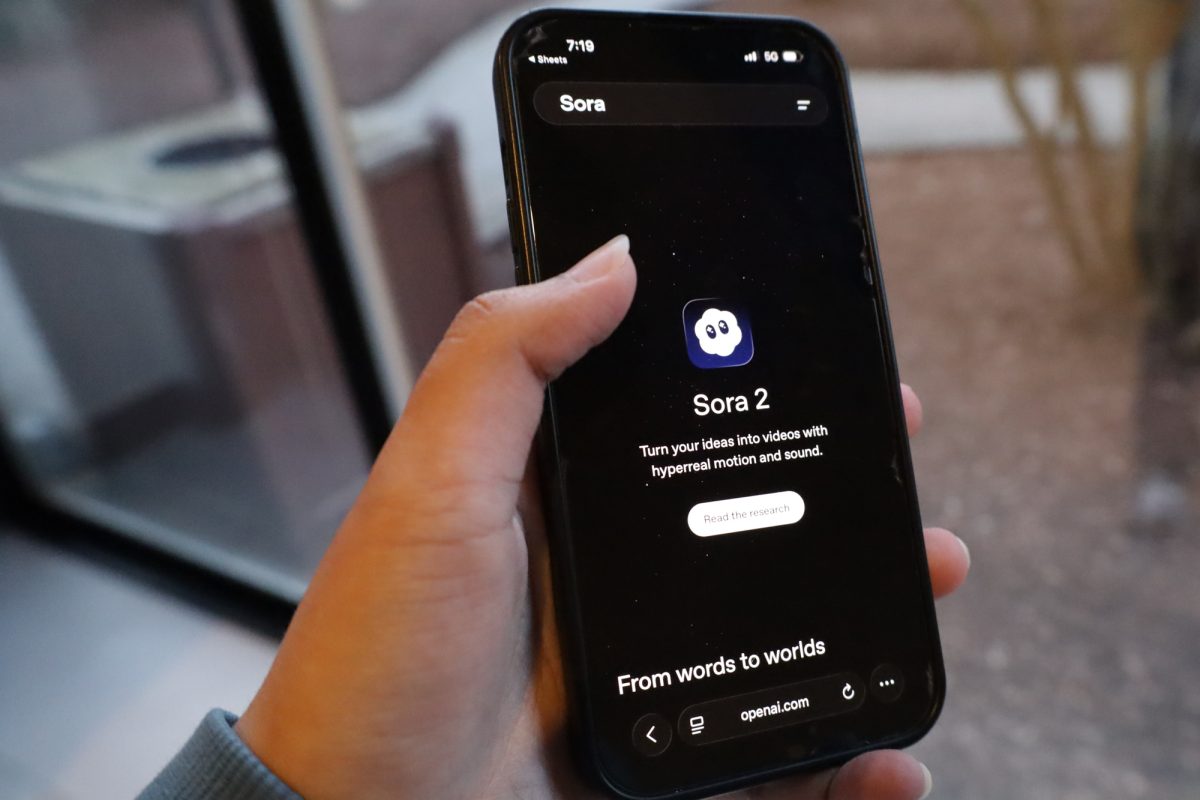












































































To be honest, I used to be a ChatGPT hater. Maybe I still am.
As a journalism major, the idea of asking artificial intelligence to write my papers or stories was absolutely loathsome. I was the one liking the reels about AI wasting water and reprimanding my brother for using AI to complete his assignments.

Then I started having professors encourage the use of AI — responsibly.
The change felt almost taboo: I internally cringed as I hesitantly opened TerrierGPT, the curiosity overwhelming as I typed in “How bad is AI?” The model told me my question was too broad, and summarized a list of cons: economic and labor impacts, misinformation, bias and misuse, among others.
Despite this extensive list, I felt that TerrierGPT barely scratched the surface. It left out the rising number of people, especially teens, relying on AI to be their friends or even their therapists. According to a study by Brown University’s School of Public Health, one in eight American young adults “use AI chatbots for mental health advice.”
This social dependency has resulted in irreparable consequences. There have been several cases of parents devastated by AI chatbots that encouraged their children to commit suicide.
Beyond these tragedies, another reason AI is becoming globally controversial is because of its involvement in military-grade weapon systems.
According to an investigation by +972 Magazine and Local Call, the Israeli military used AI in its indiscriminate bombing of Gaza. Thousands of Palestinians were killed because of Israel’s “Lavender” AI program. The program operated by generating “kill lists” of Gazan “suspects” who were often civilians. Many were women and children.
According to an analysis by Airwars, in the first few days of the war in Iran, American and Israeli militaries struck 1,000 targets per day with the help of Anthropic’s Claude, which was used to “speed up target selection.”
AI, journalist Rhana Natour wrote, is being used as a decision support system to recommend bombing targets during war.
Heidy Khlaaf, chief AI scientist at the AI Now Institute, discusses how these decision support systems are not so different from autonomous weapons. The people operating these systems tend to blindly trust the recommendation of AI without fact-checking, which can be highly dangerous. According to Khlaaf, these systems can also be programmed to accept high civilian casualties.
AI isn’t just being used to give you an outline for your homework or answer random questions. It is used in war by our government and has become too entrenched in military operations to simply stop.
The U.S. military used these intelligence tools before — in its recent capture of the Venezuelan president and in an airstrike in Iraq in 2024. The latter was the first time officials acknowledged a civilian casualty in an AI-assisted attack, according to a joint investigation by Airwars and The Independent, when “20-year-old student Abdul-Rahman al-Rawi was killed.” No compensation was provided to his family — only a two-sentence condolence letter.
So, AI is bad. Right?
I told my sister this and I recall her exact response. She tilted her head up towards the ceiling and chose her words carefully: “Technology is only bad when you use it the wrong way. Or when it’s put into the wrong hands.”
She was right. AI is being used in the wrong way when one of its uses is targeting potential civilians in wartime. It’s in the wrong hands when those hands belong to Israeli Prime Minister Netanyahu and President Trump.
But to paint all artificial intelligence with the same brush would be its own kind of ignorance — the truth is that it has been misused and abused, and those are two different conversations.
Realistically, AI is becoming a larger part of our lives with every passing day.
It’s everywhere: in schools, workplaces and our homes. Instead of running in the opposite direction, as I was tempted to, it may do us good to learn how to effectively and ethically use AI.
TerrierGPT mentioned that while large language models release greater amounts of carbon emissions and generate electronic waste, there are also models that improve energy efficiency or monitor climate change.
However, Elizabeth Main, director of sustainability at the University of Maryland, Baltimore, said it best: AI can be used towards sustainability efforts, but its environmental effects shouldn’t be ignored.
In a 2025 publication from the university, Main wrote “By 2027, it is estimated that AI’s projected water usage could reach between 4.2 and 6.6 billion cubic meters, equal to four to six times the annual water usage of the entire country of Denmark.”
Leaning on AI for basic functions not only drains energy and water, but also creates a sense of dependency that can erode important skills over time. Every task you outsource is a skill you’re slowly handing away.
Use AI wisely, or don’t use it at all.


