






















Zohran Mamdani won. All kinds of emotions have been on blast this past week, but for more than 1 million voters, it’s been a relief and joy.
Mamdani, the current mayor-elect of New York City, ran as the Democratic candidate against independent Andrew Cuomo and Republican Curtis Sliwa. The youngest mayor-elect in nearly a century, Mamdani won the election with just over 50% of the vote. He is the first Muslim and South Asian to run the Big Apple.
Mamdani referenced his religion of Islam and his mixed background — Ugandan, Indian, South African, New Yorker — in speeches throughout his mayoral campaign.
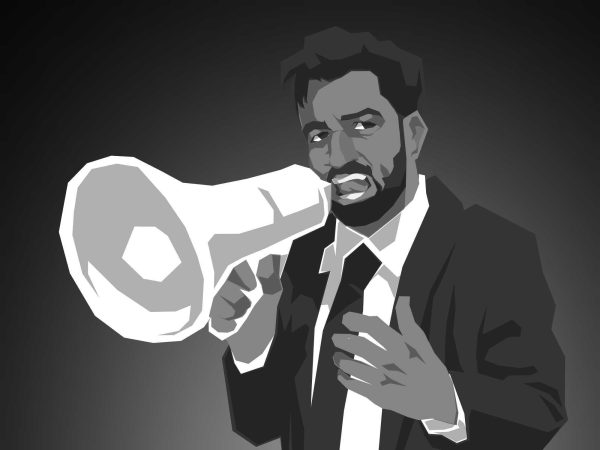
He referred to not just his own experiences as a Muslim American but also to others’ experiences, telling stories of those in his community. At a rally in Queens, Mamdani asked the crowd to raise their hands if they’ve ever been called a “terrorist” — and dozens in the audience raised their hands.
In a city that has dealt with the Islamophobic aftershocks of 9/11, it’s healing witnessing a Muslim elected as mayor 24 years later — especially in a society where those who were Muslim or simply “looked” Muslim were targeted by not just strangers, but by their own neighbors, workplaces and by Western media.
This meant attacks on visible Muslims, Sikhs, South Asians and Arabs. Sikhs aren’t Muslim, and Arab Christians exist — but that didn’t matter to the passerby white supremacist that would yell “terrorist” across the street. As Washington Post columnist and editor Colbert I. King wrote in a 2005 column, “Political freedom is not extended to Muslim Americans.”
As someone who was born post-9/11, this is the only reality I know.
The self-awareness of my hijab walking into non-Muslim dominated spaces. The disturbed looks in white-populated neighborhoods. The “Go back to your country” comments or the “Where are you really from?” questions after insisting I am American.
I’m not the only one — and neither is Mamdani.
I grew up watching the media dehumanizing people who looked like me, branding my religion as one of extremism. The Islamophobia spike after 9/11 wasn’t a one-time incident.
When the pro-Palestine movement expanded after Oct. 7, 2023, a study showed a 300% increase in calls reporting Islamophobia to the Council on American-Islamic Relations in the following months.
This was what it meant to be a Muslim American — reading news of a white man attacking his hijabi neighbor and killing her 6-year-old Palestinian-American son or trying to find major outlets covering the targeted shooting of a Muslim woman in Maryland. High hate crime, low accountability.
But no more.
Mamdani has begun to change that cycle, joining the movement of other Muslim politicians before him. It means something when he attends Friday service at a mosque in San Juan, Puerto Rico after his mayoral win. It means something when he is attacked for eating with his hands and is called a “communist” by the president of the United States.
For far too long, politicians have used “Muslim” and “Arab” as derogatory insults, with the president himself calling Senate Minority Leader Chuck Schumer “Palestinian” as a slur.
So, it means something when Cuomo, a Democrat, agrees that “Mamdani would celebrate another 9/11,” and people from both the left and right denounce his comment as Islamophobic. That is what change looks like.
Mamdani didn’t just say he was for the people — he showed it. He visited communities of all backgrounds and connected with voters from all generations. Through that, he reinforced his Islamic values of helping others in need.
For others, this was the universal free childcare and affordable housing that he promised. He was for the working class people that made up the city — not the few elite that pulled the strings. Mamdani is ready to tax the rich and uplift the poor. He’s cutting those strings.
For Muslims, it meant no longer feeling like the odd one out. Mamdani’s win means a city that scarred its own Muslim population with Islamophobic attacks post-9/11 is now a city that has chosen a Muslim leader. Someone who is standing for all New Yorkers, of all backgrounds, religions and ethnicities.
In Mamdani’s victory speech, he said, “The sun may have set over our city this evening, but as Eugene Debs once said, ‘I can see the dawn of a better day for humanity.’”
New York City has a Muslim mayor. You never know: We might soon have a Muslim president.


Lucio Maffei • Nov 19, 2025 at 3:33 pm
Excellent article!