































































































Over the last five years, artificial intelligence has pervaded nearly every aspect of modern industry. From newspapers to art agencies to engineering firms, executives seem keen to adopt this cost-cutting technology — in the same sense that the owners of a landfill would be keen to adopt trash compactors. Now, the entertainment sector is facing a push for AI adoption.
AI is an iterative technology. It cannot, and does not, create new things. This isn’t inherently negative — most forms of human communication are iterative, after all. Our knowledge of science and medicine has been built up over generations. Our stories, too, are formulaic — which makes for effective entertainment. Fantastical settings, larger-than-life characters and moral fables make it easier to captivate audiences.

But being unable to come up with new ideas — and recycling old material into bland, generic copies — is detrimental to these works. And it’s one of the most maligned aspects of the entertainment industry. For years, fans of franchises like Marvel and Star Wars have complained at great length about new releases being bland and repetitive. TV series have suffered much the same fate.
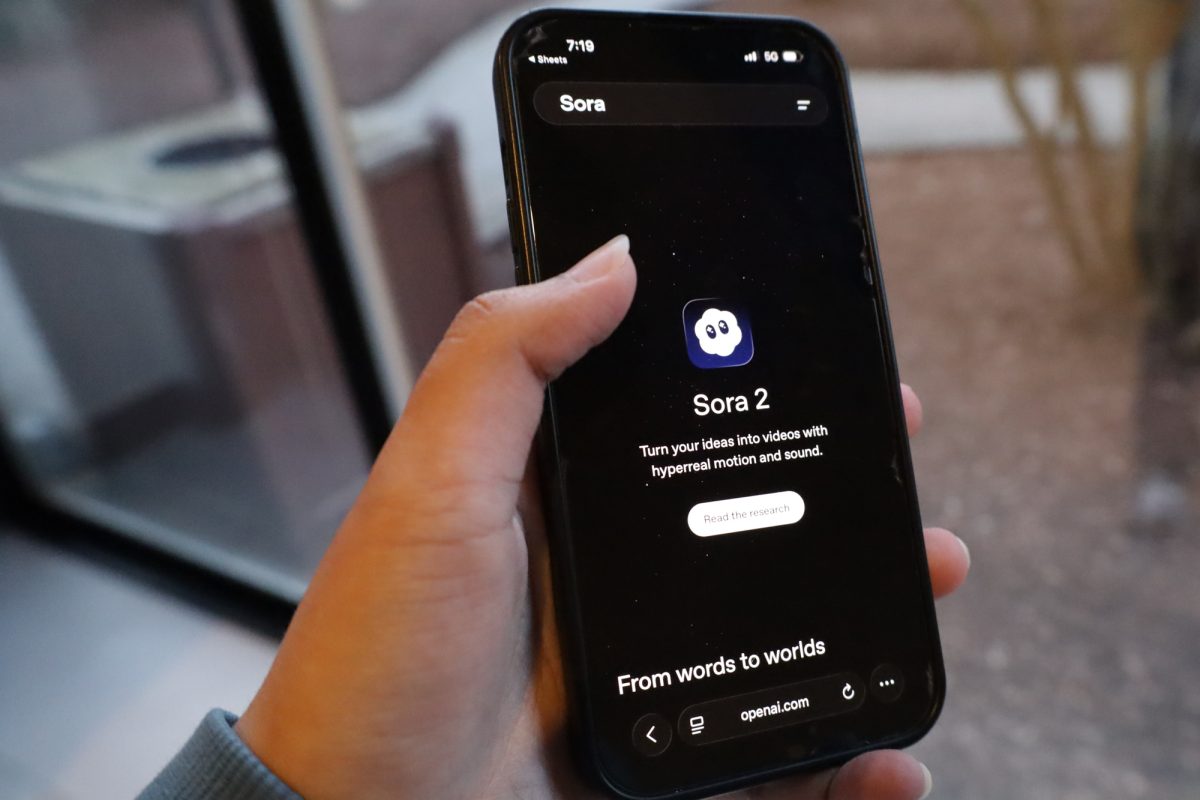
Yet, rather than invest in new stories to provide fresh material to their viewers, Disney — a multimedia goliath that now controls over 200 companies — signed a $1 billion contract with OpenAI’s Sora image generator. While this deal fell apart once Sora’s shutdown was announced March 24, it represents a disturbing shift in the media landscape.
Of all the companies to invest into AI tools, Disney should have enough resources to produce anything they can dream up. This wasn’t a one-time partnership, either. Disney has shown they’re still interested in AI — putting out a call for a new “AI Executive” to “change how they create” as recently as March 27.
Why is one of the richest, largest media empires trying to cut corners? The simple answer: AI maintains the status quo, cheaply and efficiently, without asking questions.
While Disney doesn’t have a monopoly over the entertainment industry, they are part of a small number of firms that levy massive power and influence over thousands of smaller producers. The technical term for this arrangement is an oligopoly — as in oligarchy, except with companies operating in the free market.
There are plenty of valid criticisms for AI in entertainment. AI-generated videos aren’t up to the standard of real-life footage, and machines tend to hallucinate — creating an illogical action sequence or forgetting entirely what a character looks like between frames.
But AI is improving daily, trained using an unthinkably vast amount of data — much of it without permission. Already, AI can generate photorealistic human beings and still backgrounds with few, if any, errors. Xpression, a program released in 2023, allows users to alter their appearance during live video calls.
The day will come when AI-generated content is nearly indistinguishable from human-made film. Some might be able to tell there’s something “off” about it,but for a company focused on mass-producing entertainment, this hardly matters.
Disney has been producing live-action remakes of their classic animated films for the last decade. Many of the changes these films make are commendable — acknowledging and removing racist stereotypes being the height of this praise. But they also prey on a nostalgia-filled audience by releasing a flood of subpar content.
In a space where innovation has died out, volume is everything. If the creative well is dry now, what will it become if Disney can generate “Toy Story 6” with a few prompts and the push of a button? Entertainment giants have tried to go after animators, artists and writers in the past, even with their business model reliant on their talent and labor. How many jobs would be wiped out by a mass adoption of generative AI?
There is no reason for a company of Disney’s size, with its resources, to pursue AI-generated content as its business model — no reason except sheer greed. The pursuit of profit in defiance of all else is too often rewarded in our economy, with workers left to fend for themselves as executives line their pockets with stolen wages.
There may come a day when AI can replicate the genius of Steven Spielberg, Shonda Rhimes or Spike Lee. But if we cannot tell the difference between right and wrong — if we do nothing to stop the unchecked avarice of the corporate class — a few misplaced hands will be the least of our concerns.


