








































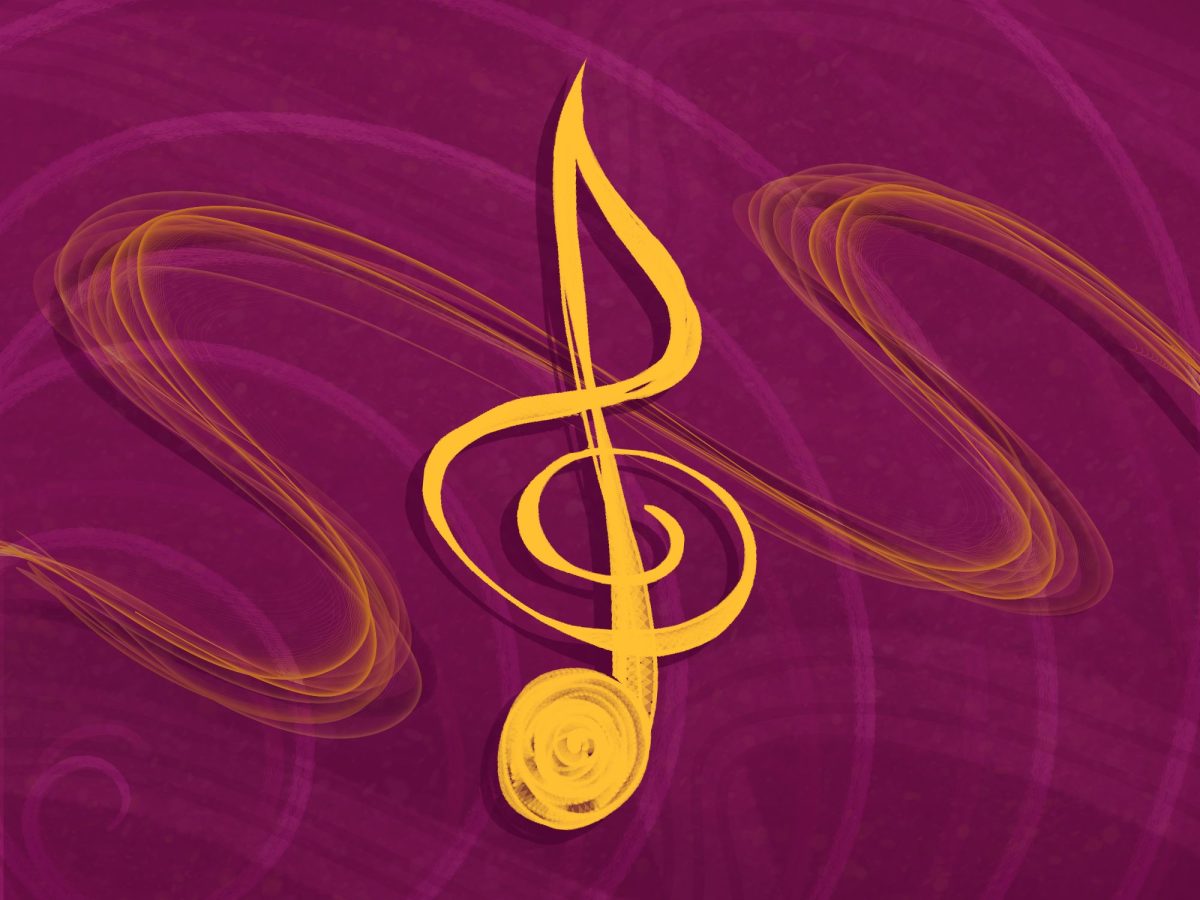
















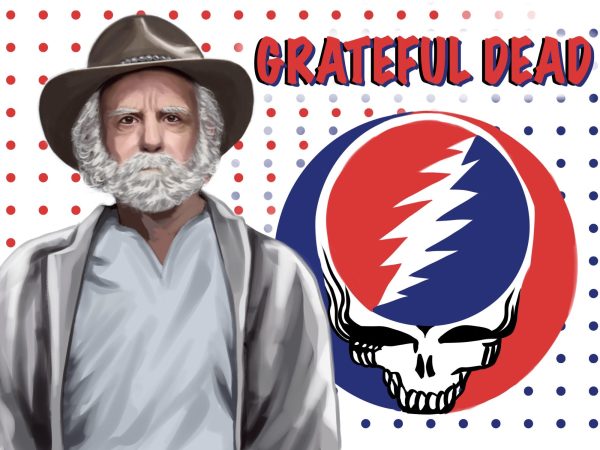
Bob Weir, the legendary songwriter, guitarist and co-founding member of the Grateful Dead, died earlier this month at 78. An eclectic group of people — not limited to John Mayer and Nancy Pelosi — gathered in San Francisco, Weir’s birthplace, on Saturday to memorialize a music-filled life well led. Mayer played a beautiful rendition of “Ripple,” one of the few songs Weir sang during the Dead’s early years.
I celebrated in my own way by listening to “Ripple” on the Saturday he passed, wishing it were warmer outside, because “Ripple” is the kind of song that is meant to be listened to in the grass — preferably live, although I never got that pleasure with any of the many bands Weir was a part of during his lifetime.
I got into the Grateful Dead late in high school, after accidentally buying a faded Dead t-shirt thinking it was a Green Day logo — no idea how that happened. I lost the receipt and couldn’t return it so I figured I might as well listen to the band, just in case I got stuck in one of those man-on-the-street videos and was asked to name three songs to prove my t-shirt-wearing-worth.
It took me a few years to appreciate the greatness that lives beyond the Dead’s studio albums, in the hundreds of live recordings that we are privileged enough to have online at our fingertips. Live music is perhaps our greatest collective method of communication and community, and there are few musicians who understood that better than Weir.
Based on most estimates I’ve found online, Weir played over 4,500 live shows during his lifetime, an average of 75 live shows per year, if you start counting when the band was officially formed in 1965. 75!
That kind of number is unfathomable today. Concerts have become increasingly expensive and thus are less attainable regular experiences for younger crowds, the kind of people bands like the Grateful Dead made their name with decades ago.
But it’s not just the prices. I think frequently about how isolated we still are from each other, even though the pandemic has ended. Our isolation is exacerbated by our phones and the behaviors we normalized during the quarantine, and sometimes it seems that loneliness has become our default, in the ways we socialize and in the ways we enjoy and create art.
Everyone listens to their music through headphones — sometimes I catch myself doing so even when I’m sitting alone in my room, one of those great and holy spaces where your music should be played loud. So much of the modern music industry is about metrics, meaning that songs are shorter and intentionally meant to cater to our slaughtered attention spans. These factors all contribute to a music environment that is the antithesis to what people like Weir made music for: its shared celebration.
The Dead’s constant approach to music, one that meanders and lingers, is a cure for our flighty, inconsistent brains. Listen to the nearly 16-minute live version of “Fire on the Mountain” from the Dead’s 1977 show at Cornell University and clear your brain from the evil sound waves of 30 second videos that can’t hold your attention.
With Weir’s passing comes the sobering realization that only two members of the core band — Mickey Hart and fellow percussionist Bill Kreutzmann — are still alive today. It’s hard not to look at the slow fade-out of Grateful Dead members as a greater comment on the way music has changed, the dissemination of risk and those rare people, like Weir, who made rock really special.
Weir did an interview in 2025 with Rolling Stone, and he spoke about the legacy he hoped to leave behind.
“I’m hoping that people of varying persuasions will find something they can agree on in the music that I’ve offered, and find each other through it,” he said.
Music is one of the few places of common ground that remains, even when we lose sight of its true identity. Let’s linger there while it lasts.


